
MEN'S HORMONAL HEALTH | MIDTOWN MANHATTAN, NEW YORK CITY
Low Testosterone in NYC: How to Test It, What It Actually Means, and What Physician-Led Treatment Looks Like
Published by Dr. Shilpa Paradkar Singh, MD
Last Updated: September 2026

- In-Office Testing
Full panel drawn on-site.
- Complete Differential
Testosterone is one possibility. We check all of them
- Physician-Led Treatment
Managed by a clinician, not a machine algorithm
- Ongoing Monitoring
Dose adjustment, hematocrit, PSA: the full protocol.
Fast answer
Atrium Medical Primary Care offers low testosterone evaluation and clinically managed treatment at 160 East 56th Street, 12th Floor, in Midtown Manhattan. Testing, diagnosis, treatment, and monitoring are all handled in one office by a board-certified MD; not a telehealth questionnaire, not a subscription kit, and not a rotating nurse practitioner you have never met.
Low testosterone aka male hypogonadism requires more than a single blood draw and a rushed prescription. It requires a morning fasting lab panel with multiple measurements, a physical examination, a clinical differential to rule out other causes, and a treatment plan matched to your labs, symptoms, fertility goals, and lifestyle. That is what we do at Atrium.
Not sure whether your symptoms fit the pattern? Try Atrium’s Low Testosterone Clinical Navigator, a patient-friendly clinical assessment tool that may help you organize your symptoms before a visit.
Most major insurance plans are accepted for testing and evaluation. Treatment coverage varies by formulation and plan. Call 212-457-1722 or book online to schedule.
On This Page
- Testosterone is not what the supplement industry says it is
- The decline: what the data show
- What low testosterone feels like: the full symptom picture
- How testosterone is measured and why the method matters
- The complete treatment landscape: what works, what the evidence says
- What patients report: life on the other side of treatment
- Why in-office physician-led care beats the DTC model
- Low testosterone testing near Midtown East
- Low testosterone FAQ
Testosterone is not what the supplement industry says it is
Testosterone is suddenly everywhere. It is in men’s health ads, podcast clips, gym conversations, DTC lab dashboards, and now even national defense policy. In July 2026, Defense Secretary Pete Hegseth announced that the Pentagon would begin annual testosterone deficiency screening for service members age 30 and older, with testing available voluntarily for younger troops. His framing was military readiness, performance, resilience, and long-term health. Whether you love that idea, hate it, or think the politics around it are ridiculous, the signal is hard to miss. Testosterone has moved from the edge of the wellness conversation into the center of mainstream health policy. That makes it even more important to talk about testosterone correctly.
In 1998, researchers in Georgia collected saliva samples from male fans watching two sporting events: a college basketball game and a televised World Cup soccer match. They measured testosterone before and after each contest. In both settings, testosterone rose in fans of the winning team and fell in fans of the losing team. These were not athletes. They were not competing. They were men sitting in seats or watching television, and their testosterone changed measurably based on whether the team they identified with won or lost. The study was published in Physiology and Behavior in 1998 (Bernhardt et al., PMID: 9811365).
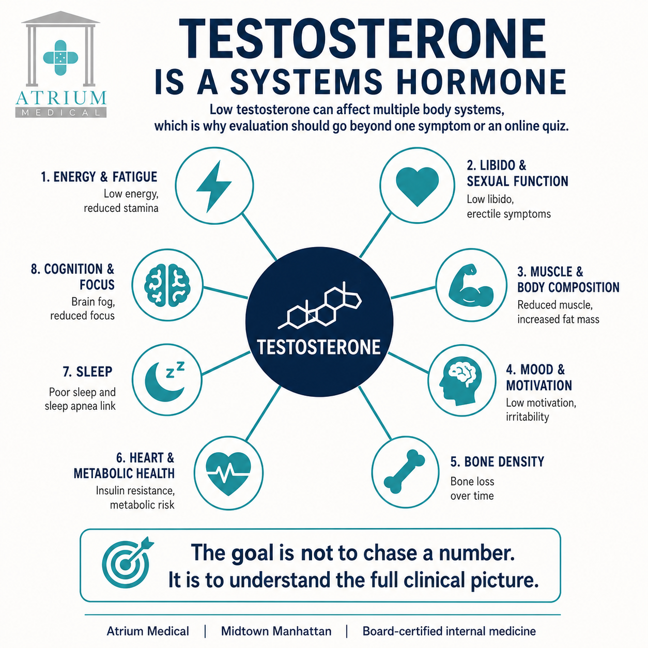
That finding is useful because it breaks the cartoon version of testosterone. Testosterone is not just a gym hormone, libido hormone, or “alpha male” number on a lab report. It responds to status, stress, sleep, metabolism, motivation, competition, connection, and the body’s sense of whether it is thriving or under strain.In men, testosterone works more like a systems hormone than a simple fuel gauge. It participates in energy regulation, sexual function, mood, motivation, muscle and bone metabolism, cardiovascular health, sleep quality, and body composition. When it is working normally, most men do not think about it. When it is off, the symptoms can show up in several places at once.
That is why low testosterone is often missed. One man gets sent for a sleep study. Another is told it is stress. Another tries an antidepressant. Another keeps training harder and wonders why his body is not responding. Sometimes those explanations are right. Sometimes testosterone is part of the picture. Often, more than one thing is happening at the same time.
The supplement industry noticed the demand before medicine handled the conversation well. That is how we ended up with testosterone boosters, optimization platforms, online questionnaires, and subscription clinics built around a real biological problem, but not always around a complete medical evaluation. Atrium’s approach starts in a different place: not “How do we get this man testosterone?” but “What is actually causing the symptoms?” That means history, examination, morning labs, a real differential, and a treatment plan that fits the patient in front of us.
The decline: what the data show
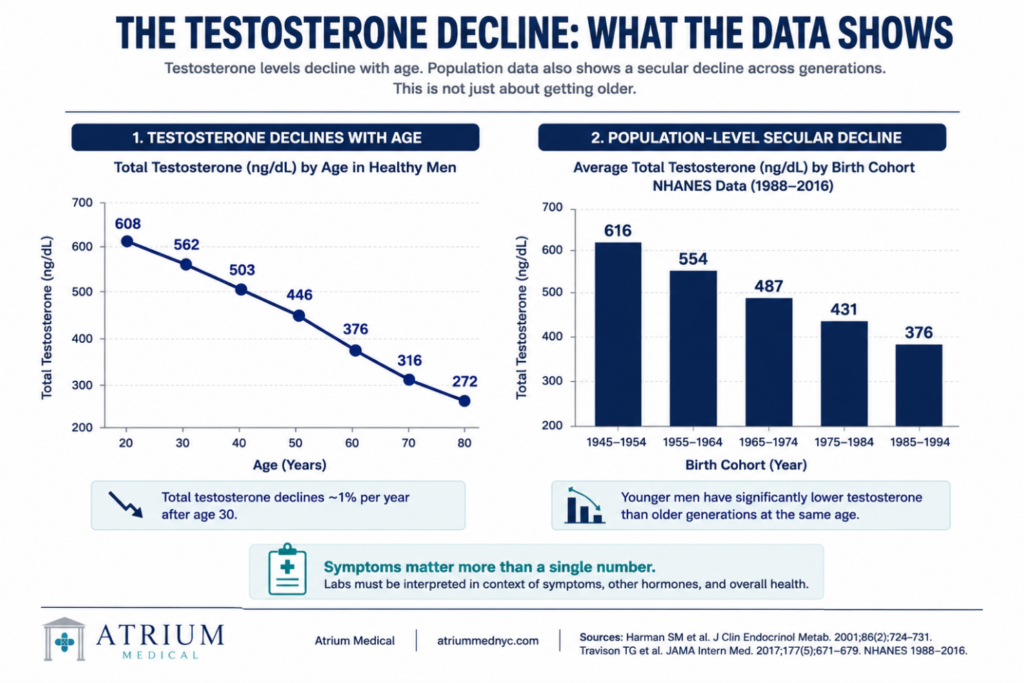
Testosterone usually peaks in late adolescence. In a large normative model published in PLOS ONE, Kelsey et al. found that mean total testosterone peaked around age 19, at about 15.4 nmol/L. After that, the story gets more complicated. Testosterone does tend to decline with age, but the rate depends on the man, the measurement method, and the health factors you control for. That last part matters.
The commonly cited estimate is that free testosterone falls by about 1 to 2 percent per year in aging men. The Baltimore Longitudinal Study of Aging, one of the most important long-term datasets in this area, followed 890 men over decades and found an average total testosterone decline of about 0.124 nmol/L per year. In that study, hypogonadal testosterone levels were seen in about 20 percent of men over 60, 30 percent of men over 70, and 50 percent of men over 80 (PMID: 11158037).
But two findings are easy to miss if you only hear the simple “testosterone drops with age” version. First, age may not be the whole story. A 2023 reanalysis of the Baltimore data found that once researchers controlled for conditions like diabetes, obesity, heart failure, anemia, peripheral artery disease, and stroke, age alone was no longer a strong independent predictor of testosterone decline (PMID: 36897060).That is clinically important because it changes the conversation. If testosterone decline were just aging, there would be little to do except measure it and replace it. But if metabolic disease, sleep disruption, cardiovascular risk, weight gain, medications, alcohol, and chronic illness are part of the mechanism, then the workup matters. Some of the forces pushing testosterone down are modifiable.
Second, men today appear to have lower testosterone than men of the same age a generation ago. The Massachusetts Male Aging Study followed 1,532 men across three waves from 1987 to 2004 and found a population-level decline larger than the expected decline from aging alone. In other words, a man in his 40s or 50s in the early 2000s had lower testosterone, on average, than a man of the same age in the late 1980s.A separate 20-year study of 991 US Air Force veterans found a similar pattern. Even men who maintained their weight had an average testosterone decline of 117 ng/dL, or about 19 percent, over two decades (PMC3797769).
The reasons are still debated. Sleep disruption, obesity, insulin resistance, processed food patterns, lower physical activity, chronic stress, medication exposure, and endocrine-disrupting chemicals are all plausible contributors. The important point for patients is simpler: low testosterone is not always just “getting older.” It is often a signal that the body’s metabolic, sleep, endocrine, or cardiovascular systems need a closer look.
What low testosterone feels like: the full symptom picture
Most men do not walk in saying, “I think I have male hypogonadism.” They usually come in with something more ordinary: low libido, fatigue, weaker workouts, more belly fat, worse sleep, lower motivation, or a mood that feels flatter than it used to. That is why low testosterone is easy to miss. The symptoms often develop gradually. A man may spend a year blaming stress, age, work, parenting, travel, poor sleep, or not training hard enough before anyone checks the hormone system carefully.
The AUA Testosterone Deficiency Guideline identifies reduced libido as the symptom most closely associated with testosterone deficiency. But the full picture is broader. A 2026 European Urology review by Boeri et al. describes a wider clinical pattern: reduced libido, erectile dysfunction, decreased muscle mass and strength, increased fat mass, low bone density, fatigue, and mood changes, including depression and irritability (PMID: 41448986). The 2024 NIHR TestES evidence synthesis also links male hypogonadism with sexual dysfunction, tiredness, reduced muscle strength, and reduced quality of life.
The hard part is that none of these symptoms belongs only to testosterone. Fatigue and brain fog can come from thyroid disease, anemia, sleep apnea, depression, diabetes, low B12, medication effects, or chronic stress. Erectile dysfunction is often vascular. Low mood and low motivation may be depression, but they may also be hormonal, metabolic, sleep-related, or all of the above. Central weight gain and poor body composition often point to insulin resistance or metabolic syndrome. Reduced exercise tolerance can come from sleep apnea, cardiovascular risk, overtraining, under-recovery, or low testosterone.
A man with low libido and fatigue may have low testosterone. He may have another condition that looks like low testosterone. He may have both. That is why the evaluation matters.
This is the diagnostic problem that questionnaire-based testosterone platforms cannot solve well. A symptom checklist can move quickly to a prescription, but it cannot do a physical exam, review the full history, evaluate sleep apnea risk, check thyroid and metabolic markers, distinguish primary from secondary hypogonadism, or decide whether fertility-preserving treatment should come first. This is why Atrium starts with the full picture: symptoms, history, physical exam, morning labs, sleep, thyroid, metabolic health, medication review, and fertility goals. The question is not just whether testosterone is low. The question is why it is low, and what treatment makes clinical sense.
| Symptom | Also seen in | Why it matters |
|---|---|---|
| Fatigue | Thyroid disease, sleep apnea, anemia, depression, diabetes | Treating fatigue with testosterone when the cause is untreated sleep apnea is ineffective and potentially harmful |
| Low libido | Depression, relationship factors, medications (SSRIs, beta-blockers, opioids), prolactinoma | Medication review and mental health screening are part of the workup |
| Erectile dysfunction | Cardiovascular disease, diabetes, neurological causes, psychological factors | ED in a man under 50 with no risk factors is a possible early vascular warning sign |
| Low mood / irritability | Depression, anxiety, thyroid disease, chronic pain | Testosterone therapy is not antidepressant therapy -- treating depression as low T is a clinical error |
| Poor body composition | Metabolic syndrome, insulin resistance, cortisol dysregulation, poor sleep | Weight loss and insulin sensitization can raise testosterone without any hormonal therapy |
| Cognitive fog | Thyroid disease, sleep apnea, depression, vitamin B12 deficiency | B12, TSH, and sleep screen before attributing to testosterone |
| Reduced muscle response to training | Overtraining, inadequate protein, sleep deficit, age-related sarcopenia | Low T can contribute but is rarely the sole cause in men under 45 |
How testosterone is measured and why the method matters
The standard clinical measurement is a morning serum blood draw. Testosterone follows a diurnal rhythm — it peaks in the early morning, typically between 7 and 10 AM, and falls throughout the day. Testing in the afternoon can produce a reading 20 to 35 percent lower than a morning draw in the same man. The AUA Testosterone Deficiency Guideline recommends two separate morning fasting measurements before making a diagnosis of hypogonadism, because single readings can be affected by acute illness, recent alcohol consumption, severe sleep deprivation, and sampling time.
The full diagnostic panel Atrium orders goes beyond a single total testosterone number:
The American Urological Association uses a total testosterone level below 300 ng/dL as a reasonable diagnostic cutoff. But a number alone is not a diagnosis. Symptoms and consistently low levels on two separate morning blood draws must be evaluated together.
| Test | What it measures | Why it matters |
|---|---|---|
| Total testosterone | All testosterone in serum, bound and free | The starting point -- but not sufficient alone, especially in older men with elevated SHBG |
| Free testosterone (calculated or direct) | Unbound fraction available to cells | Men with high SHBG may have normal total T but symptomatic low free T |
| SHBG (Sex Hormone-Binding Globulin) | Principal testosterone-binding protein | Rises with age; essential for calculating free T accurately |
| LH (Luteinizing Hormone) | Pituitary signal to testes to produce testosterone | Distinguishes primary hypogonadism (testicular failure, high LH) from secondary (pituitary/hypothalamic, low/normal LH) |
| FSH (Follicle-Stimulating Hormone) | Pituitary signal for spermatogenesis | Low FSH in context of low T suggests secondary hypogonadism; important for fertility counseling |
| Prolactin | Pituitary hormone that can suppress testosterone signaling | Elevated prolactin can point to pituitary causes of low testosterone, medication effects, or other secondary causes that should be evaluated before starting testosterone therapy |
| Estradiol (E2) | Estrogen converted from testosterone via aromatase | Elevated estradiol can suppress the HPG axis and cause symptoms; important before prescribing aromatase inhibitors |
| Hematocrit | Red blood cell concentration | Baseline required -- testosterone therapy raises hematocrit, and if it exceeds 54% dose adjustment is needed |
| PSA (Prostate Specific Antigen) | Prostate health marker | Required baseline in men over 40 before initiating testosterone therapy |
| Thyroid (TSH) | Thyroid function | Rules out thyroid disease as cause of overlapping symptoms |
| Metabolic panel | Glucose, A1c, lipids, kidney/liver function | Metabolic health is a major driver of testosterone status and affects treatment decisions |
Why LH, FSH, and prolactin matter
Two men can have the same low testosterone number for completely different reasons. If testosterone is low and LH/FSH are high, the brain is sending the signal but the testes are not responding normally. That points toward primary hypogonadism.
If testosterone is low and LH/FSH are low or inappropriately normal, the problem may be upstream: the pituitary, hypothalamus, sleep apnea, medications, metabolic disease, chronic illness, or another suppressive factor. Prolactin helps complete that picture because elevated prolactin can suppress the reproductive hormone pathway and occasionally points to a pituitary cause that should not be missed.
This is why Atrium does not treat a testosterone number in isolation. The pattern matters. The cause matters. Fertility matters. The goal is to understand the pathway before deciding whether testosterone therapy, a fertility-preserving option such as clomiphene or hCG, or a non-hormonal intervention is the right next step.
Why saliva and urine testing are not the clinical standard
Saliva testing measures free testosterone without SHBG. It was used in the Bernhardt et al. sports fan studies because it is non-invasive and can capture real-time hormonal fluctuations — useful for research, not for clinical diagnosis. Saliva testosterone is highly variable by time of day, food, drink, oral health, and collection technique. Reproducibility is substantially lower than serum. The AUA guideline does not endorse saliva testing for diagnosis of hypogonadism.
Urine testing measures testosterone metabolites over a 24-hour collection period. Useful in research settings for understanding metabolic pathways. Not standard for clinical diagnosis or treatment monitoring.
A note on DTC lab panels: Function Health, Marek Health, and similar platforms offer testosterone panels as part of broader biomarker packages. A number in a dashboard is not a diagnosis. Without clinical context, no LH/FSH or prolactin pattern to help distinguishing primary, secondary, medication-related, or pituitary causes of low testosterone, no SHBG to calculate true free T, no physician examination, no differential workup, a testosterone result is a starting point for a conversation, not a treatment indication.
The complete treatment landscape: what works, what the evidence says
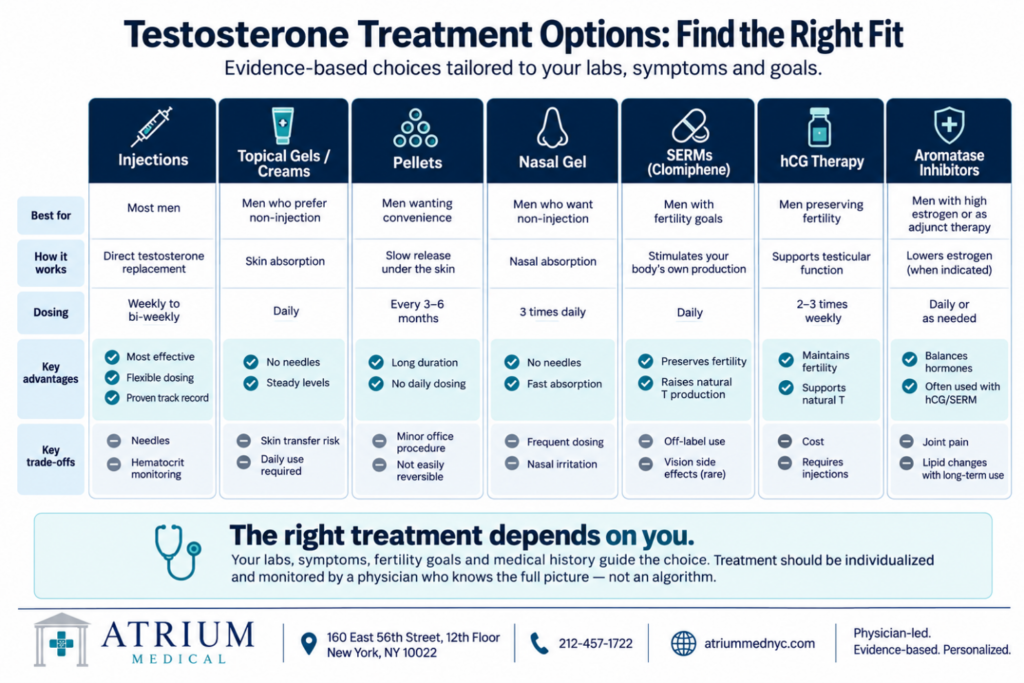
Treatment selection is not a menu. It is a clinical decision based on the patient’s symptoms, lab pattern, age, fertility goals, lifestyle, comorbidities, and capacity for ongoing monitoring. What follows is the evidence landscape as it exists in 2026.
Direct testosterone therapy
Intramuscular and subcutaneous injections (testosterone cypionate or enanthate): The most widely used delivery method in clinical practice. A 2026 retrospective cohort study of 9,537 men treated between 2019 and 2024 found subcutaneous injections used in 89 percent of cases (World Journal of Men’s Health, 2026). Injections provide stable, flexible, adjustable dosing — typically weekly or biweekly. Hematocrit and testosterone levels are measured 4 to 6 weeks after initiation. The main practical consideration is that self-injection or in-office injection requires a routine. For men who want consistent levels and flexibility to adjust dose, injections are the most controllable modality.
Transdermal gels (AndroGel, Testim, Vogelxo, generics): Applied daily to skin, typically shoulders, upper arms, or abdomen. Convenient but requires discipline — daily application, variable absorption by individual, and the critical issue of skin transfer to partners and children through direct skin contact. Gels should be washed off before contact and application sites covered. Not appropriate in households with young children unless transfer precautions are strictly followed.
Subcutaneous pellets (Testopel): Implanted under the skin every 3 to 6 months under local anesthesia. Convenient once placed — no daily or weekly routine. The trade-off is inflexibility: dose cannot be adjusted between insertions, and if levels run too high or too low, the patient waits until the next cycle. Not the right choice for patients who need fine dose control.
Nasal gel (Natesto): Applied intranasally three times daily. Faster clearing, less HPG axis suppression than other formulations, and some data suggesting less impact on spermatogenesis. Less common in practice. Useful in select patients.
Oral testosterone undecanoate (Jatenzo, Kyzatrex): Newer oral formulations that avoid the liver toxicity seen with older oral androgens (methyltestosterone). Must be taken with a fat-containing meal. Variable absorption, multiple daily doses, and prior authorization requirements limit uptake.
Fertility-preserving alternatives All forms of direct testosterone therapy suppress spermatogenesis by reducing the pituitary’s LH and FSH output — the feedback loop that drives testicular sperm production. For reproductive-age men, this makes testosterone therapy a de facto contraceptive. Men who want to preserve fertility require a different approach.
SERMs: clomiphene and enclomiphene Selective estrogen receptor modulators work by blocking estrogen receptors in the hypothalamus and pituitary, removing the feedback suppression and causing the pituitary to release more LH and FSH, which in turn stimulates the testes to produce more testosterone endogenously. The 2025 meta-analysis by Hohl et al. (Archives of Endocrinology and Metabolism, 10 randomized controlled trials, 819 patients) found SERM therapy raised total testosterone by a mean of 273.76 ng/dL compared to placebo (p<0.01), with comparable efficacy to testosterone gel, and with the critical advantage of significantly improving sperm concentration parameters. Enclomiphene is the active isomer of clomiphene and may have a more favorable side effect profile. These are off-label uses with accumulating evidence and AUA acknowledgment.
hCG (human chorionic gonadotropin) Mimics LH and directly stimulates the testes to produce testosterone, helping preserve intratesticular testosterone and sperm production. Unlike direct testosterone replacement, hCG can support spermatogenesis, although it can still suppress endogenous LH through hormonal feedback. The only FDA-approved therapy in this class. Can be used alone, combined with SERMs, or added to low-dose testosterone therapy to maintain testicular function. The 2025 AUA infertility guidelines endorse this approach.
Aromatase inhibitors (anastrozole, letrozole): Block the conversion of testosterone to estradiol. Niche use in men with elevated estradiol contributing to HPG axis suppression or symptomatic high estrogen. Not a first-line monotherapy for low testosterone. The 2024 AUA guidelines endorse aromatase inhibitor use in select men with low testosterone and elevated estradiol. Requires careful monitoring — excess suppression of estradiol causes bone loss and joint symptoms.
| Modality | Frequency | Fertility impact | Key consideration |
|---|---|---|---|
| IM/SQ injections | Weekly or biweekly | Suppresses sperm production | Most controllable; gold standard for most patients |
| Transdermal gel | Daily | Suppresses sperm production | Skin transfer risk; variable absorption |
| Subcutaneous pellets | Every 3-6 months | Suppresses sperm production | Convenient but inflexible -- dose cannot be adjusted mid-cycle |
| Nasal gel (Natesto) | Three times daily | Less suppression than other TRT | Less common; useful in select patients prioritizing some fertility preservation |
| SERMs (clomiphene/enclomiphene) | Daily oral | Preserves and may improve spermatogenesis | First-line for fertility-conscious men; comparable T elevation to gel (Hohl et al. 2025) |
| hCG | Injections 2-3x per week | Preserves spermatogenesis and testicular volume | Only FDA-approved fertility-preserving option; can combine with SERMs or low-dose TRT |
| Aromatase inhibitors | Daily oral | No direct sperm suppression | Niche use -- elevated estradiol only; not first-line monotherapy |
What the evidence actually shows on outcomes
Three landmark datasets define the current evidence picture.
The TRAVERSE Trial (2023, New England Journal of Medicine): The most important cardiovascular safety study in the history of testosterone therapy. 5,204 men with hypogonadism and pre-existing or high risk of cardiovascular disease, randomized to testosterone gel or placebo, followed for a mean of 33 months. Primary finding: no significant difference in major adverse cardiovascular events between testosterone and placebo groups. This provided the strongest randomized evidence to date that appropriately prescribed testosterone therapy does not increase major adverse cardiovascular events in men with confirmed hypogonadism and existing or elevated cardiovascular risk.
The T-Trials (2016, NEJM and JAMA): Seven coordinated placebo-controlled trials in 788 men aged 65 and older with confirmed hypogonadism. Findings: one year of testosterone therapy improved sexual function significantly. No improvement in cognitive function was demonstrated. Physical function improved modestly in some measures. Bone density improved. These results define realistic expectations: testosterone therapy is not a cognitive enhancer in older men, but it does meaningfully improve sexual function, physical capacity, and bone metabolism.
NIHR TestES Evidence Synthesis (2024): Systematic review commissioned by the UK National Institute for Health and Care Research. Confirmed improvement in sexual dysfunction, fatigue, muscle strength, and quality of life with testosterone replacement therapy in men with hypogonadism.
Testosterone and heart health: association is not the same as treatment
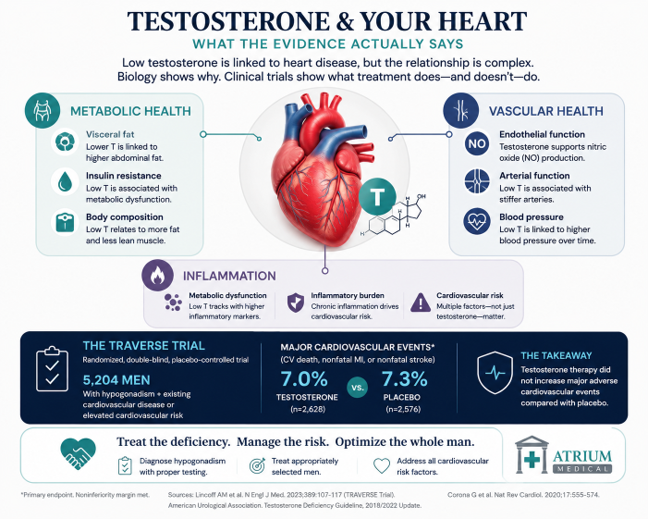
Low testosterone and cardiovascular disease travel together surprisingly often. Men with lower testosterone levels have higher rates of obesity, insulin resistance, metabolic syndrome, diabetes, and cardiovascular disease. Observational studies have also associated low testosterone with higher cardiovascular and overall mortality. But that does not mean low testosterone is necessarily causing the cardiovascular disease, or that giving testosterone prevents heart attacks.
Part of the connection appears to run through metabolic health. Visceral fat, insulin resistance, poor sleep, chronic illness, and physical inactivity can suppress testosterone. At the same time, low testosterone can contribute to unfavorable changes in body composition, including reduced lean mass and increased fat mass. The relationship can therefore run in both directions.
There are plausible vascular mechanisms as well. Testosterone interacts with endothelial function and nitric oxide signaling, and testosterone deficiency has been associated with impaired vascular function. Low testosterone is also associated with higher inflammatory markers and adverse metabolic profiles. These findings help explain why testosterone status and cardiovascular health are related, but they should not be turned into the simplistic claim that “testosterone keeps your arteries open.”
The most important clinical question is: if a man actually has hypogonadism, does treating it increase cardiovascular risk?
The TRAVERSE trial was designed specifically to answer that question. More than 5,000 men with symptomatic hypogonadism and either existing cardiovascular disease or elevated cardiovascular risk were randomized to testosterone or placebo. Major cardiovascular events occurred at similar rates in the two groups, establishing noninferiority of testosterone therapy for the trial’s primary cardiovascular endpoint.
TRAVERSE also found higher rates of atrial fibrillation, acute kidney injury, and pulmonary embolism in the testosterone group. In February 2025, the FDA removed its boxed-warning language concerning increased cardiovascular risk from testosterone products following its review of TRAVERSE, while requiring updated blood-pressure warnings. Cardiovascular safety is therefore more nuanced than simply concluding that testosterone is either good or bad for the heart.
That is reassuring, but it does not turn testosterone into a cardiovascular drug. Testosterone therapy should be used to treat appropriately diagnosed hypogonadism, while blood pressure, cholesterol, diabetes, weight, smoking, exercise, and other established cardiovascular risk factors are managed on their own merits.
Daily tadalafil: where erectile function and vascular health overlap
Erectile dysfunction is often treated as a sexual-function problem, but in many men it is also a vascular one. That is part of why tadalafil has become interesting beyond the bedroom.
Tadalafil is a PDE5 inhibitor best known as Cialis. Unlike sildenafil, it can be taken as a low daily dose, typically 2.5 to 5 mg, rather than only as needed before sex. Daily 5 mg tadalafil is also used for lower urinary tract symptoms related to benign prostatic hyperplasia. The practical advantage is straightforward: instead of timing a dose around sexual activity, the medication maintains a steady effect throughout the day.
The longevity interest comes from cardiovascular data. A 2024 systematic review and meta-analysis pooled 16 long-term studies involving 1,257,759 people. PDE5 inhibitor use was associated with a 22 percent lower risk of major adverse cardiovascular events and a 30 percent lower risk of all-cause mortality. Those are large associations, but the underlying studies were predominantly observational. They do not prove that tadalafil prevents heart attacks or extends life, and they are not a reason to prescribe tadalafil to a healthy man solely as a longevity drug.
A 2026 prospective study added a possible mechanism. Eighty-two men taking daily tadalafil underwent 24-hour Holter monitoring before and after treatment. After 28 days, several measures of heart-rate variability shifted in a direction consistent with greater parasympathetic activity and improved autonomic balance. That is interesting physiology, but it was a small, short study without a placebo group. It is a clue, not an outcome trial.
Daily use also means treating tadalafil like a chronic medication rather than a harmless supplement. A 2026 multinational cohort study compared 36,927 tadalafil users with an equal number of matched controls and found a modestly higher five-year incidence of glaucoma, 3.93 percent versus 3.16 percent, with higher rates of primary open-angle glaucoma and ocular hypertension. The study was observational and does not establish causation, but the authors concluded that ophthalmic evaluation and follow-up may be reasonable, particularly in patients with glaucoma risk factors.
The clinical takeaway is similar to the testosterone story itself. Daily tadalafil can be useful for the right patient, particularly when erectile dysfunction, urinary symptoms, or both are present. The cardiovascular findings are interesting enough to follow. They are not strong enough to turn tadalafil into a general-purpose longevity prescription. And if a medication is going to be taken every day for years, blood pressure, medication interactions, eye history, and longer-term adverse effects deserve the same attention as the benefits.
Tadalafil must not be combined with nitrates, including nitroglycerin, because the combination can cause a dangerous drop in blood pressure. Patients taking alpha-blockers or other blood-pressure-lowering medications also require a medication review before starting treatment. Sudden vision loss or hearing loss requires immediate medical attention.
Side effects and contraindications: who should not start testosterone therapy?
Testosterone therapy can cause elevated hematocrit (erythrocytosis), acne, fluid retention, breast tenderness or enlargement, testicular shrinkage, and suppression of sperm production. It can also increase blood pressure and may worsen untreated sleep apnea. These risks are part of the reason testosterone therapy requires a baseline evaluation and ongoing monitoring.
Testosterone therapy should generally not be started in men planning fertility in the near term, those with prostate or breast cancer, an unevaluated prostate nodule or significantly elevated PSA, elevated baseline hematocrit, untreated severe obstructive sleep apnea, uncontrolled heart failure, a heart attack or stroke within the preceding six months, or known thrombophilia. These conditions require appropriate evaluation before treatment is considered.
Monitoring: the part the DTC platforms skip
Testosterone therapy requires ongoing clinical surveillance. These are not optional.
- Testosterone levels: measured 4 to 6 weeks after initiation or dose change, then every 6 to 12 months once stable
- Hematocrit: testosterone stimulates red blood cell production — if hematocrit exceeds approximately 54 percent, dose reduction, modality switch, or therapeutic phlebotomy may be required
- PSA: annual in men over 40 on therapy — not because testosterone causes prostate cancer, but because the current evidence does not support treating men with active or suspected prostate cancer
- Estradiol: in men with symptoms of elevated estrogen (gynecomastia, fluid retention, mood changes)
- Lipids and metabolic panel: annually or as clinically indicated
What patients report: life on the other side of treatment
Clinical studies measure testosterone therapy with questionnaires, lab values, strength measures, sexual function scores, and quality-of-life scales. Patients usually describe it in more ordinary language.
The first change many men notice is sexual. Libido often improves within the first three to six weeks when testosterone deficiency is truly part of the problem. Erectile function may improve too, although erections are more complicated because blood flow, diabetes, blood pressure, medications, stress, sleep, and relationship factors all matter.
Energy is usually next. Not a cartoon burst of energy, and not the “limitless” feeling that gets sold online. More often, men describe the return of a baseline they had not realized they lost. They can get through the afternoon without dragging. Workouts stop feeling pointless. Recovery after exercise starts to feel more normal. The body feels less like it is fighting them.
Mood changes tend to be subtler, but partners often notice them. Men may feel less flat, less irritable, more patient, or more like themselves. That does not mean testosterone is an antidepressant. It means that in men with true hypogonadism, restoring a deficient hormone can affect systems that include mood, motivation, stress response, sleep, and sexual function.
Body composition takes longer. Men who are already strength training may notice over several months that training starts working again. Testosterone does not build muscle by itself. It creates a hormonal environment where sleep, protein, resistance training, and consistency have a better chance to pay off. The gym still has to happen. The hormone just makes the work less futile.
That pattern is broadly consistent with the research. The 2026 UK retrospective cohort of 9,537 men found improvements over 12 months in energy, mood, sexual function, and physical capacity. A 2024 two-year randomized controlled trial by Grossmann et al. found improvements in psychosocial function and health-related quality of life in men with metabolic hypogonadism.
What patients do not report: magical transformation. Testosterone therapy corrects a hormonal deficit. What you do with the corrected hormone environment is still your responsibility. Men who start therapy and change nothing else get partial results. Men who combine therapy with consistent sleep, strength training, metabolic health management, and monitoring tend to get results that last.
Why in-office physician-led care beats the DTC model
The DTC testosterone market exists for a reason. Men are tired, symptomatic, busy, and often frustrated by how hard it can be to get a serious answer. Companies like Hone, Ro, Hims, Maximus, and others understood that demand and built a faster front door.
The problem is what happens after the front door. Low testosterone is not a questionnaire diagnosis. A man can have the same symptoms and the same low testosterone number for very different reasons. One patient may have primary hypogonadism, where the testes are not responding normally. Another may have secondary hypogonadism, where the signal from the pituitary or hypothalamus is suppressed. Another may have sleep apnea, thyroid disease, anemia, medication effects, depression, metabolic syndrome, or several of these at once.Those distinctions are not academic. They change the treatment.
A platform can order labs. It can collect symptoms. It can ship medication. What it cannot do is examine testicular volume, check for gynecomastia, feel a thyroid gland, measure blood pressure in context, assess body composition, notice signs of hypothyroidism or anemia, or recognize that the “low T” story may actually be sleep apnea, insulin resistance, medication-related suppression, or pituitary disease. It also cannot interpret an abnormal LH, FSH, or prolactin pattern in the context of a physical exam, medication history, sleep history, fertility goals, and metabolic risk.
That is the danger of moving too quickly. If a man with untreated moderate-to-severe sleep apnea is placed on testosterone, the testosterone number may improve while the underlying problem remains untouched. In some patients, testosterone therapy can worsen sleep apnea physiology. The better answer may be a sleep study, CPAP, weight loss, medication review, or metabolic treatment before hormone therapy enters the picture.
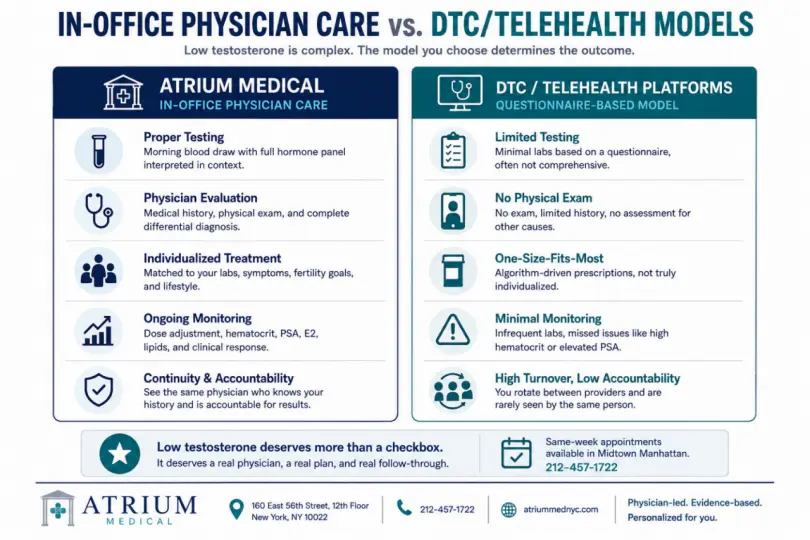
Atrium’s approach is built for that complexity. We use morning labs, physical examination, full history, and a real differential before deciding what treatment belongs on the table. Sometimes that means testosterone therapy. Sometimes it means a fertility-preserving option such as clomiphene or hCG. Sometimes it means treating the problem that is suppressing testosterone in the first place.
The prescription is the easy part. The clinical judgment is the care.
| Capability | DTC / Telehealth platform | Atrium Medical (in-person) |
|---|---|---|
| Full morning testosterone panel with LH, FSH, SHBG, estradiol | Often partial -- varies by platform | Yes -- complete panel, interpreted in clinical context |
| Physical examination | Not possible remotely | Yes -- testicular exam, gynecomastia screen, thyroid, blood pressure |
| Differential diagnosis workup (thyroid, sleep apnea, anemia, depression) | Questionnaire only -- cannot distinguish | Yes -- full clinical differential before any treatment decision |
| Primary vs secondary hypogonadism distinction | Not possible without LH/FSH and examination | Yes -- determines cause and appropriate treatment |
| Sleep apnea screening | Self-report questionnaire | Clinical screening with referral pathway if indicated |
| Fertility counseling before initiating therapy | Often absent or templated | Yes -- treatment modality matched to fertility goals |
| Hematocrit, PSA, and level monitoring | Variable -- some platforms do this | Yes -- required monitoring built into the treatment protocol |
| Dose adjustment based on labs and symptoms | Often limited or requires additional fees | Yes -- ongoing clinical management |
| Same physician continuity | Usually not -- rotating providers | Yes -- Dr. Singh across visits |
Low testosterone testing near Midtown East
Atrium Medical is located at 160 East 56th Street, 12th Floor, in Midtown East Manhattan, close to the Plaza District, Sutton Place, Park Avenue, Lexington Avenue, Grand Central, Rockefeller Center, and the Upper East Side.
That location matters for testosterone testing because timing matters. Testosterone is usually best measured early in the morning, which is exactly when most working men do not want to lose half a day navigating a hospital system or waiting in a lab queue.
Atrium is a short walk from the 59th Street/Lexington Avenue subway hub, with access to the 4, 5, 6, N, R, and W trains, and is also convenient to the E and M trains at 53rd Street. The practical version is simple: come in for an 8 AM hormone lab draw, then be back at your desk by 8:45 AM.
Most major insurance plans are accepted for evaluation and testing, including Aetna, Blue Cross Blue Shield, Cigna, UnitedHealthcare, and Medicare. Coverage for testosterone treatment itself varies by medication, formulation, prior authorization rules, and plan design.
This is the advantage of doing the workup inside a real primary care practice. The same team can evaluate the hormone panel, screen for related causes like sleep apnea or thyroid disease, monitor blood pressure, hematocrit, PSA, lipids, glucose, A1c, and cardiovascular risk, and help decide whether testosterone therapy, a fertility-preserving option, or a non-hormonal intervention is the right next step.
Low testosterone FAQ
What is low testosterone and how is it diagnosed?
Low testosterone, or male hypogonadism, is a clinical syndrome defined as persistently low serum testosterone levels in the setting of symptoms consistent with deficiency. Diagnosis requires two separate morning blood draws showing low total or free testosterone, combined with clinical symptoms. A full panel may include total testosterone, free testosterone, SHBG, LH, FSH, prolactin, estradiol, hematocrit, PSA when appropriate, thyroid testing, and metabolic labs. A number alone is not a diagnosis.
What are the symptoms of low testosterone?
Low testosterone presents as fatigue that does not resolve with sleep, reduced libido, erectile dysfunction, difficulty building or maintaining muscle, central fat accumulation, mood changes including irritability and low motivation, cognitive fog, poor sleep quality, and reduced bone density. These symptoms overlap with thyroid disease, sleep apnea, anemia, depression, and metabolic syndrome — which is why a physician examination and complete differential is required before treatment.
How fast does testosterone decline with age?
Free testosterone declines approximately 1 to 2 percent per year in aging men (PMC5308620). The Baltimore Longitudinal Study of Aging found incidence of hypogonadal testosterone levels reaches approximately 20 percent of men over 60, 30 percent over 70, and 50 percent over 80 years of age (PMID: 11158037). Separately, men today have measurably lower testosterone at any given age than men of the same age in the 1980s, independent of obesity — a population-level secular decline documented in the Massachusetts Male Aging Study (Travison et al., 2007).
What is the difference between total testosterone and free testosterone?
Total testosterone is the combined measurement of all testosterone in blood, most of which is bound to proteins — primarily sex hormone-binding globulin (SHBG) and albumin. Free testosterone is the unbound fraction that cells can actually use. As men age, SHBG rises, binding more testosterone and reducing the free fraction. A man with normal total testosterone but elevated SHBG may have genuinely low free testosterone and symptomatic hypogonadism. Both measurements matter.
What treatment options are available for low testosterone?
Treatment options include direct testosterone therapy (injections, transdermal gels, nasal gels, subcutaneous pellets), fertility-preserving alternatives (SERMs such as clomiphene and enclomiphene, hCG), and aromatase inhibitors in select cases. The right choice depends on your symptoms, lab results, fertility goals, lifestyle, and monitoring capacity. All options require ongoing monitoring of testosterone levels, hematocrit, and PSA.
Is testosterone therapy safe?
The TRAVERSE trial (2023, New England Journal of Medicine), a 5,204-man randomized controlled trial, found no increased risk of major adverse cardiovascular events with testosterone therapy compared to placebo in men with hypogonadism and pre-existing or high cardiovascular risk. Current evidence does not support testosterone therapy causing prostate cancer in men without pre-existing disease. Monitoring of hematocrit, PSA, and testosterone levels is required for safe management
Can I get testosterone therapy while preserving fertility?
Yes. Direct testosterone therapy suppresses spermatogenesis and should be considered a contraceptive in reproductive-age men. Fertility-preserving alternatives include SERMs such as clomiphene and enclomiphene, which stimulate endogenous testosterone production while preserving sperm production. A 2025 meta-analysis of 10 randomized controlled trials found SERMs raised total testosterone by a mean of 273.76 ng/dL versus placebo with comparable efficacy to testosterone gel and significantly better sperm concentration outcomes (Hohl et al., Archives of Endocrinology and Metabolism, 2025).
Why not use a DTC testosterone platform like Hone, Ro, or similar services?
DTC platforms use questionnaire-based models that cannot perform a physical examination, assess testicular volume, evaluate for sleep apnea, examine for gynecomastia, or run a complete differential to rule out thyroid disease, anemia, or depression. Low testosterone symptoms overlap substantially with several other treatable conditions. A physician who examines you and runs a full differential is not a formality — it is the step that determines whether testosterone therapy is actually the right treatment.
Does insurance cover low testosterone testing and treatment?
Testosterone blood testing is typically covered by insurance when ordered with clinical indication. Testosterone therapy coverage varies by plan and formulation — some injectable formulations are covered, while others require prior authorization. Atrium accepts Aetna, Cigna, Blue Cross Blue Shield, UnitedHealthcare, Oxford, Medicare, and most major commercial plans. Our team can verify your benefits before your visit.
How long does it take to feel the effects of testosterone therapy?
Libido improvement is typically the first benefit, often within 3 to 6 weeks. Energy and mood changes follow over weeks 4 to 8. Muscle responsiveness and body composition changes typically emerge over months 3 to 6 with consistent exercise. Bone density changes occur over 12 to 24 months. Response is influenced by baseline levels, age, body composition, sleep quality, and adherence to monitoring and follow-up.
Sources and clinical references
- Bernhardt PC et al. Testosterone changes during vicarious experiences of winning and losing among fans at sporting events. Physiol Behav. 1998;65(1):59-62. PMID: 9811365
- Harman SM et al. Longitudinal effects of aging on serum total and free testosterone levels in healthy men. Baltimore Longitudinal Study of Aging. J Clin Endocrinol Metab. 2001;86(2):724-731. PMID: 11158037
- Travison TG et al. A population-level decline in serum testosterone levels in American men. J Clin Endocrinol Metab. 2007;92(1):196-202. Massachusetts Male Aging Study
- Mazur A et al. Is rising obesity causing a secular (age-independent) decline in testosterone among American men? PLoS One. 2013;8(10):e76178. PMID: PMC3797769
- Schoots MH et al. The rate of change in declining steroid hormones: a new parameter of healthy aging in men? PMC5308620. Aging Male. 2017
- Carto CA et al. Association between comorbidities and longitudinal changes in total testosterone among men from the Baltimore Longitudinal Study of Aging. PMID: 36897060. 2023
- Boeri L et al. Testosterone Therapy in Adult Males with Hypogonadism. Eur Urol. 2026 Jul;90(1):32-43. PMID: 41448986
- Cruickshank M et al. The effects and safety of testosterone replacement therapy for men with hypogonadism: the TestES evidence synthesis. NIHR Journals Library. 2024
- Lincoff AM et al. Cardiovascular Safety of Testosterone-Replacement Therapy (TRAVERSE Trial). N Engl J Med. 2023;389(2):107-117
- Hohl A et al. Clomiphene or enclomiphene citrate for the treatment of male hypogonadism: systematic review and meta-analysis of randomized controlled trials. Arch Endocrinol Metab. 2025. doi: 10.20945/2359-4292-2025-0093
- AUA Testosterone Deficiency Guideline. American Urological Association. 2024 update
- Grossmann M et al. Testosterone treatment, weight loss and health-related quality of life and psychosocial function in men: a 2-year RCT. J Clin Endocrinol Metab. 2024;109(8):2019-2028
- US military testosterone screening: what’s behind the “high T” push?
- Hotta Y et al. Testosterone Deficiency and Endothelial Dysfunction: Nitric Oxide, Asymmetric Dimethylarginine, and Endothelial Progenitor Cells. Sex Med Rev. 2019;7(4):661-668. PMID: 30987932.
- Soulaidopoulos S, et al. Long-term effects of phosphodiesterase-5 inhibitors on cardiovascular outcomes and death: a systematic review and meta-analysis. Eur Heart J Cardiovasc Pharmacother. 2024. PMID: 38777751.
- Yıldız G, Kunak T. Daily tadalafil administration improves cardiac autonomic regulation in men with non-organic erectile dysfunction: a prospective heart rate variability study. Sexual Medicine. 2026. PMID: 42125416.
- Hsia Y, et al. Risk of glaucoma among patients using tadalafil for lower urinary tract symptoms: a multinational cohort study. Br J Ophthalmol. 2026. PMID: 42552102.
- Bhasin S, et al. Testosterone Therapy in Men With Hypogonadism: An Endocrine Society Clinical Practice Guideline. J Clin Endocrinol Metab. 2018.
- FDA. FDA Issues Class-Wide Labeling Changes for Testosterone Products. February 28, 2025.
- FDA. Tadalafil Prescribing Information.
Ready to get an actual answer about your testosterone?
Not a quiz score or a dashboard number. A physician evaluation, a complete morning panel, a differential that rules out everything else, and a treatment plan — or a clear explanation of why testosterone therapy is not the right answer for you right now.
Atrium Medical is at 160 East 56th Street, 12th Floor, Midtown East — three blocks south of the 59th Street subway hub on the 4, 5, 6, N, Q, R, and W lines. Most major insurance accepted for evaluation and testing. Book online or call 212-457-1722.