
ANNUAL PHYSICAL EXAM | MIDTOWN MANHATTAN, NEW YORK CITY
Annual Physical Exam in NYC:
What Is Included and Why It Matters
Published by: Dr. Shilpa Paradkar Singh, MD, Board-certified Internist and Founder
Last Updated: September 2026

- Physician-Led Care
Internal Medicine Review
- Same-Day Access
Often Available
- Insurance Accepted
Most Major Plans
- Midtown East
160 East 56th Street
Fast answer
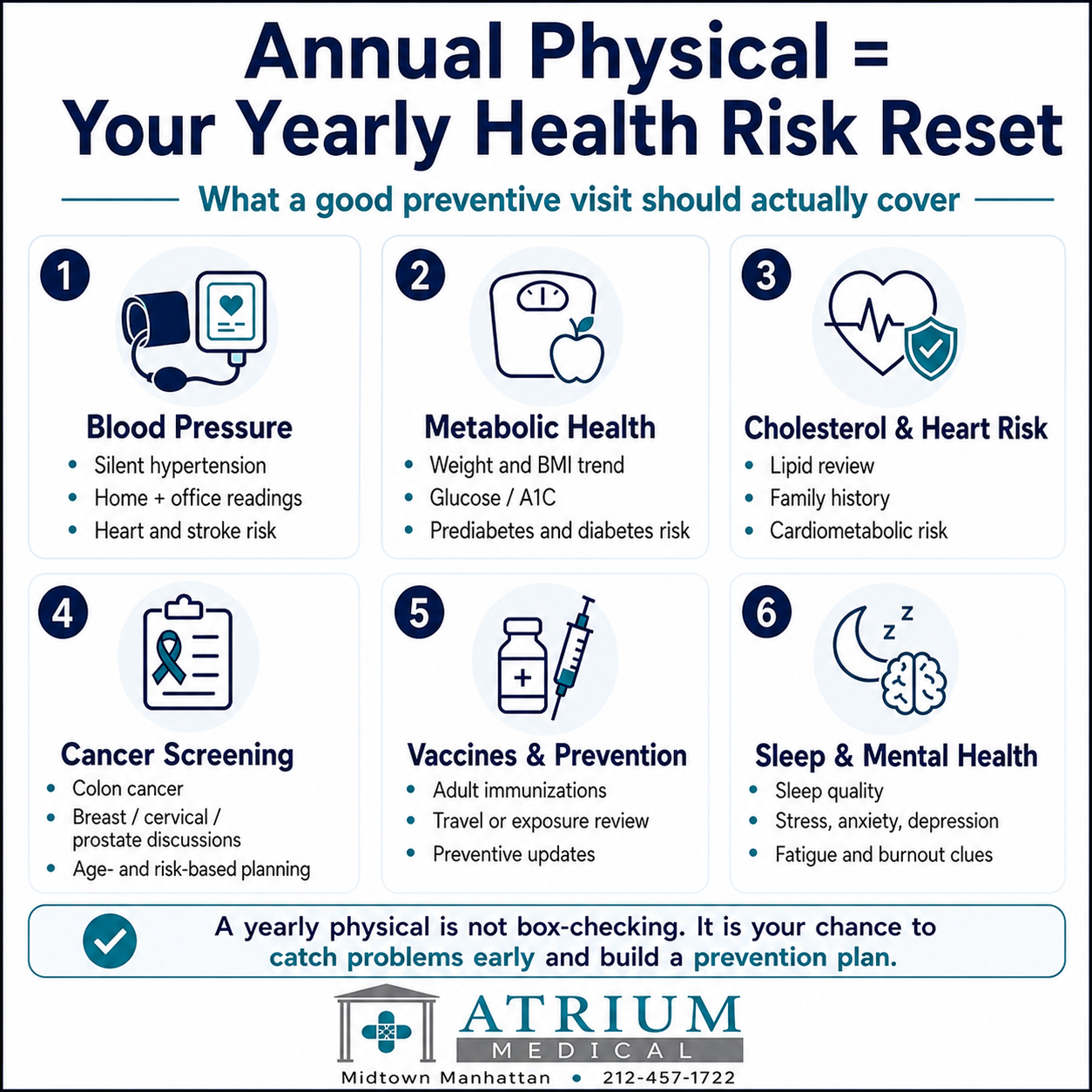
An annual physical should not feel like a rushed box-checking ritual. At its best, it is your yearly health risk reset: a structured visit where your doctor looks for the problems that are easy to ignore until they become expensive, dangerous, or harder to reverse.
At Atrium Medical in Midtown Manhattan, an annual physical is not just vitals and labs. We use the visit to review blood pressure, cardiometabolic risk, medications, family history, cancer screening, vaccines, sleep, mental health, weight, alcohol use, sexual health, and the slow changes in health that busy New Yorkers often miss. In a city as diverse as New York, preventive care also has to make room for ancestry, family history, pregnancy history, body composition, and lived environment because generic checklists miss real risk.
We also do not believe in the testing circus. Some practices market annual physicals like a shopping cart of advanced scans, hormone panels, genetic tests, longevity markers, and expensive add-ons. Some deeper testing is useful for the right patient. Some of it adds cost, anxiety, and false positives without improving care. A good doctor should know the difference.
The goal is simple: catch silent problems early, update your prevention plan, and build a real primary-care relationship before something urgent happens.
Ready to schedule? Atrium Medical is located at 160 East 56th Street, 12th Floor, near the 59th Street subway hub and Grand Central. Same-day and next-day primary care appointments are often available. We accept Aetna, Cigna, Blue Cross Blue Shield, UnitedHealthcare, Oxford, Medicare, and most major plans. Book online, check insurance, or call 212-457-1722.
On This Page
- What is an annual physical?
- What is included at an Atrium annual physical?
- Why annual physicals matter even if you feel fine
- Silent conditions an annual physical can help catch
- What modern preventive care looks at now
- 2026 cholesterol guidelines and smarter heart-risk screening
- Risk is personal: family history, ancestry, and prevention in NYC
- Modern preventive care without the testing circus
- Does an annual physical include X-rays or imaging scans?
- Why annual physicals matter in your 30s and 40s
- Screening by age and risk
- Annual Physicals and your insurance company
- How to prepare and whether to fast
- The follow-up protocol: what happens when your labs reveal an issue
- NYC and Midtown Manhattan logistics
- Annual Physical FAQ
What is an annual physical?
An annual physical, also called a preventive visit or yearly checkup, is a scheduled visit focused on prevention, screening, and long-term health planning. It is different from a problem-focused visit for a specific symptom or diagnosis.
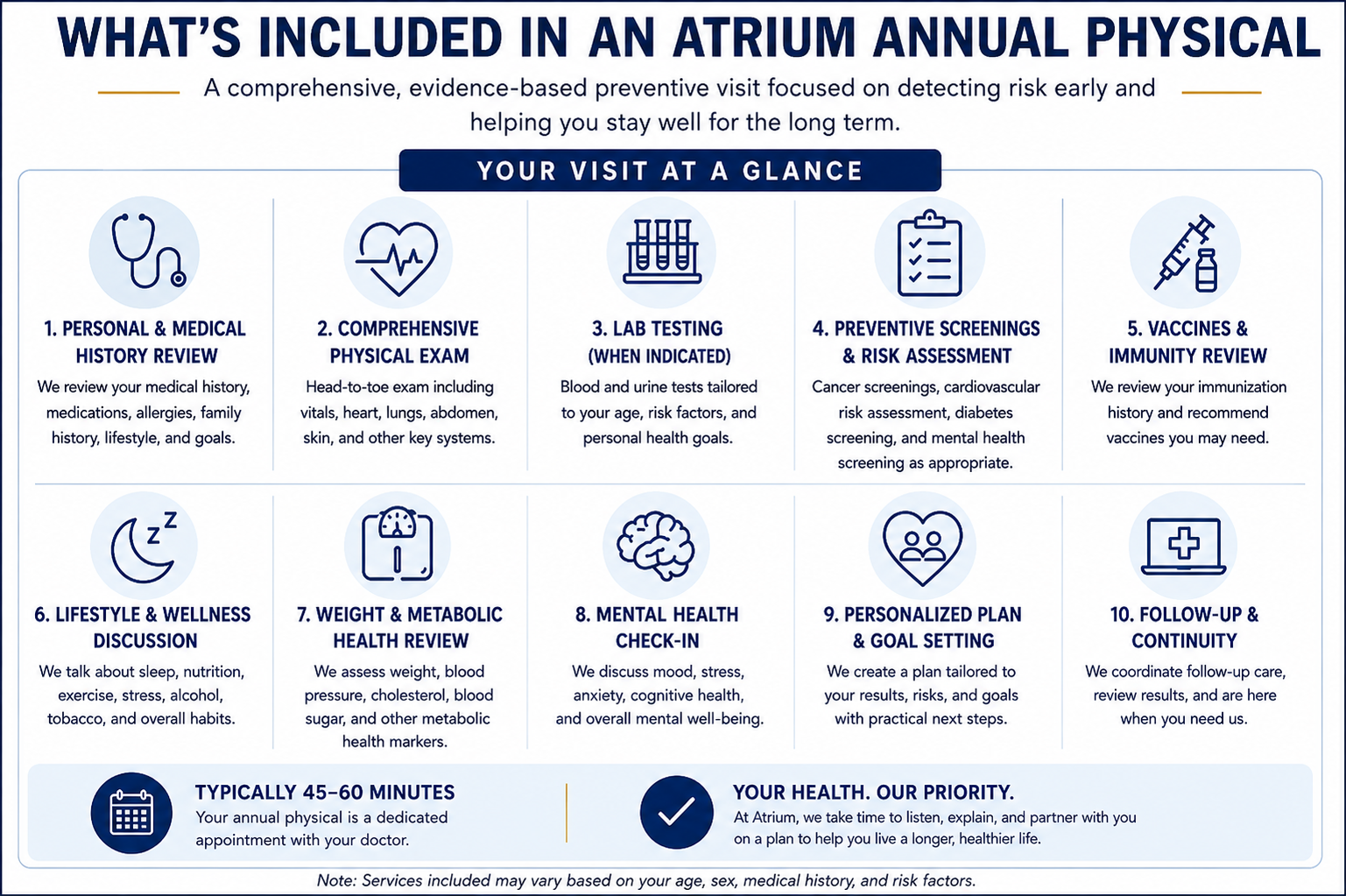
During a physical, your clinician reviews your history, medications, allergies, family history, lifestyle, vital signs, physical exam findings, preventive labs when appropriate, vaccines, cancer screening needs, and major risk factors for chronic disease.
The visit is not meant to turn every patient into a medical project. It is meant to identify what actually matters for your age, risk profile, family history, and life in New York City.
What is included at an Atrium annual physical?
An annual physical is a preventive visit. Its purpose is to look for silent risk, update your screening plan, review your overall health, and catch problems that may not yet be causing symptoms.
That is different from a diagnostic visit. A diagnostic visit is when your clinician evaluates an active symptom, manages a known condition, changes medication, addresses a new complaint, or works through a specific medical problem.
In real life, the two can overlap. You may come in for a physical and mention headaches, knee pain, worsening reflux, chest discomfort, insomnia, uncontrolled blood pressure, medication side effects, or a new rash. Those concerns matter, and your clinician should take them seriously. But once the visit shifts from screening to evaluating or managing a specific problem, insurance may treat that portion as diagnostic rather than preventive.
A good annual physical is not a rushed “anything you want” visit. It is a structured prevention visit. If you have several active symptoms or chronic issues that need careful attention, we may recommend a separate office visit so those concerns can be handled properly and your preventive physical can stay focused on screening and long-term risk.
| Part of visit | What it means |
|---|---|
| History and risk review | Medical history, family history, surgeries, medications, allergies, alcohol, tobacco, cannabis or other substance use, sexual health, diet, exercise, sleep, stress, and mental health. |
| Vital signs | Blood pressure, heart rate, weight, BMI trend, and other measurements when clinically appropriate. |
| Physical exam | Heart, lungs, abdomen, thyroid, lymph nodes, skin, neurologic observations, and targeted exam based on age, sex, symptoms, and risk. |
| Preventive labs | Common labs may include CBC, metabolic panel, lipid panel, A1C or glucose, thyroid testing when appropriate, urinalysis when indicated, and other tests based on risk. |
| Cancer screening planning | Colon, breast, cervical, prostate, lung, and skin cancer screening discussions based on age, risk, family history, and symptoms. |
| Vaccines and prevention | Adult immunization review [LINK: https://www.cdc.gov/vaccines/hcp/imz-schedules/adult-age.html], travel or exposure questions when relevant, and screening updates. |
| Lifestyle and mental health | Sleep, stress, anxiety, depression, alcohol, exercise, nutrition, weight, and burnout patterns that often show up as physical symptoms. |
| Follow-up plan | A practical plan for next steps, including lab review, medication changes if needed, referrals, imaging, or televisit follow-up. |
Why annual physicals matter even if you feel fine
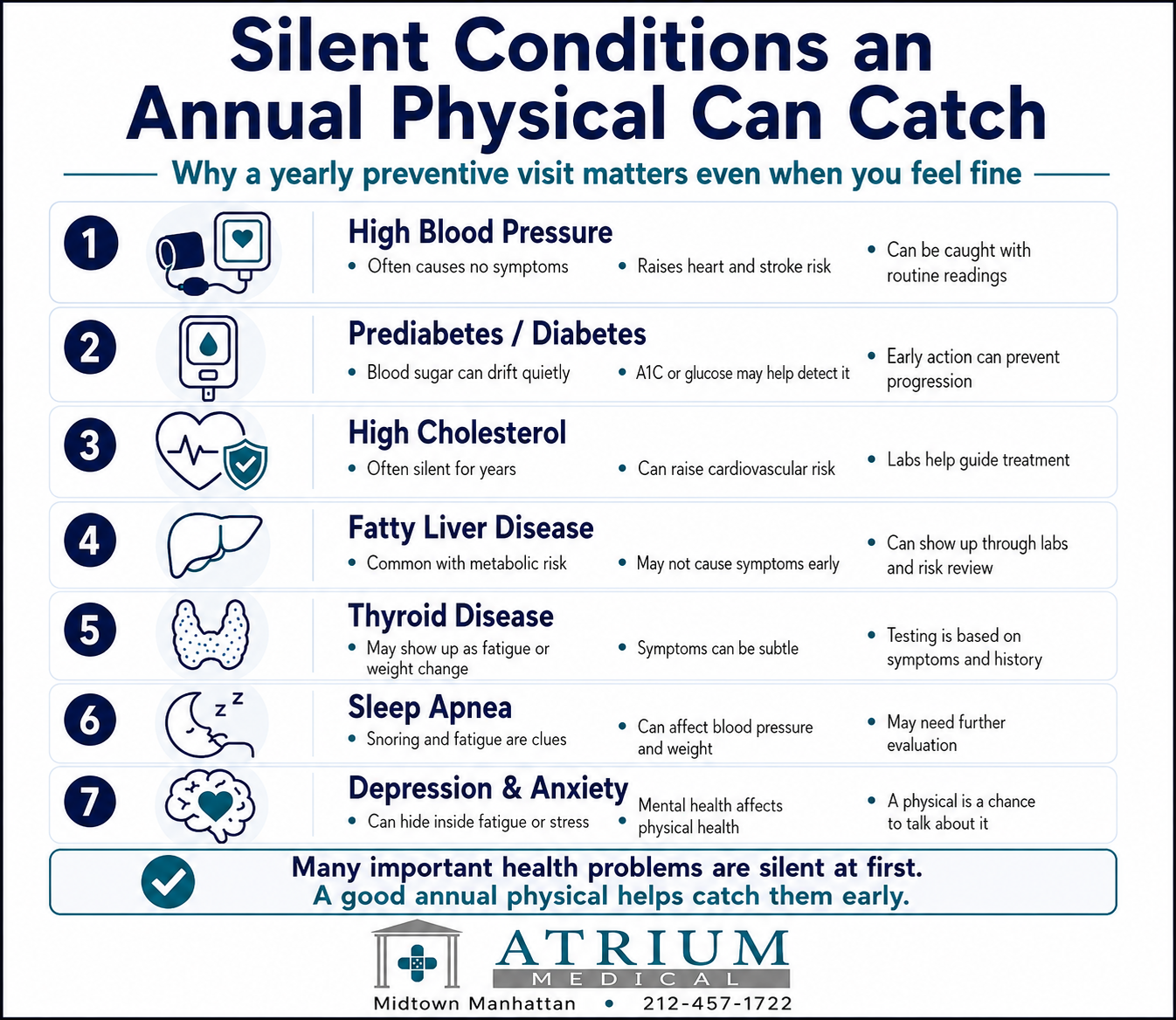
Feeling fine is not the same thing as being risk-free. Many of the conditions that do the most long-term damage begin quietly. Blood pressure can rise without symptoms. Blood sugar can drift for years before diabetes is diagnosed. Cholesterol risk can build silently. Sleep apnea can hide inside fatigue. Depression and anxiety can present as burnout, insomnia, headaches, alcohol use, or vague body symptoms.
That is why annual physicals are not just for people who are sick. They are for people who want to catch the slow-moving problems before they become bigger problems.
| Silent issue | Why it matters | What a physical can catch |
|---|---|---|
| High blood pressure | Often causes no symptoms but raises heart and stroke risk. | Office blood pressure, home readings, medication and lifestyle review. |
| Prediabetes or diabetes | Blood sugar can drift quietly for years. | A1C or glucose testing when appropriate, weight and metabolic risk review. |
| High cholesterol | Heart risk can build silently over time. | Lipid testing, family history, risk discussion, advanced markers when useful. |
| Fatty liver disease | Common with weight gain, alcohol, insulin resistance, and metabolic risk. | Liver enzymes, metabolic labs, weight trend, alcohol and medication review. |
| Thyroid disease | Can show up as fatigue, weight change, mood symptoms, palpitations, or bowel changes. | Thyroid testing when the history supports it. |
| Sleep apnea | Can drive fatigue, blood pressure, weight gain, and heart risk. | Sleep history, snoring, morning headaches, referral or testing when appropriate. |
| Depression and anxiety | Often show up as fatigue, insomnia, concentration issues, pain, or alcohol use. | Screening and a real conversation, not just a checkbox. |
What modern preventive care looks at now
The right level of testing depends on the person. A 29-year-old marathon runner, a 42-year-old executive with a strong family history of early heart disease, a 51-year-old woman entering menopause, and a 63-year-old patient on five medications do not need the same annual physical.
| Modern prevention area | How Atrium thinks about it |
|---|---|
| Cardiometabolic risk | Blood pressure, cholesterol, A1C, weight trend, central adiposity when relevant, family history, and risk over time. |
| Advanced lipid markers when useful | ApoB and Lp(a) are not for every patient, but they can matter when family history, early heart disease, or confusing cholesterol patterns are present. |
| Weight and metabolic health | Nutrition, exercise, sleep, alcohol, medications, GLP-1 eligibility, muscle preservation, and long-term maintenance when relevant. |
| Sleep | Sleep quality, snoring, possible sleep apnea, fatigue, insomnia, shift work, travel, and the downstream impact on blood pressure and weight. |
| Mental health | Depression, anxiety, burnout, alcohol use, stress physiology, and whether symptoms are hiding inside fatigue or physical complaints. |
| Menopause and perimenopause | Hot flashes, sleep changes, mood, bleeding patterns, bone health, cardiovascular risk, weight changes, and treatment discussion when appropriate. |
| Wearables and home data | Home blood pressure logs, Apple Watch alerts, sleep tracking, CGM data, or other device data can be useful when interpreted clinically rather than as a source of health anxiety. |
| Vaccines and screening | Adult vaccines and cancer screening should be updated based on current guidance, risk, and patient preference. |
2026 cholesterol guidelines and smarter heart-risk screening
The old version of prevention was too often: check a cholesterol panel, glance at LDL, and move on. That is not enough for everyone. The newer framework asks a better question: who is quietly accumulating risk, and how early do we need to intervene so prevention still has time to work?
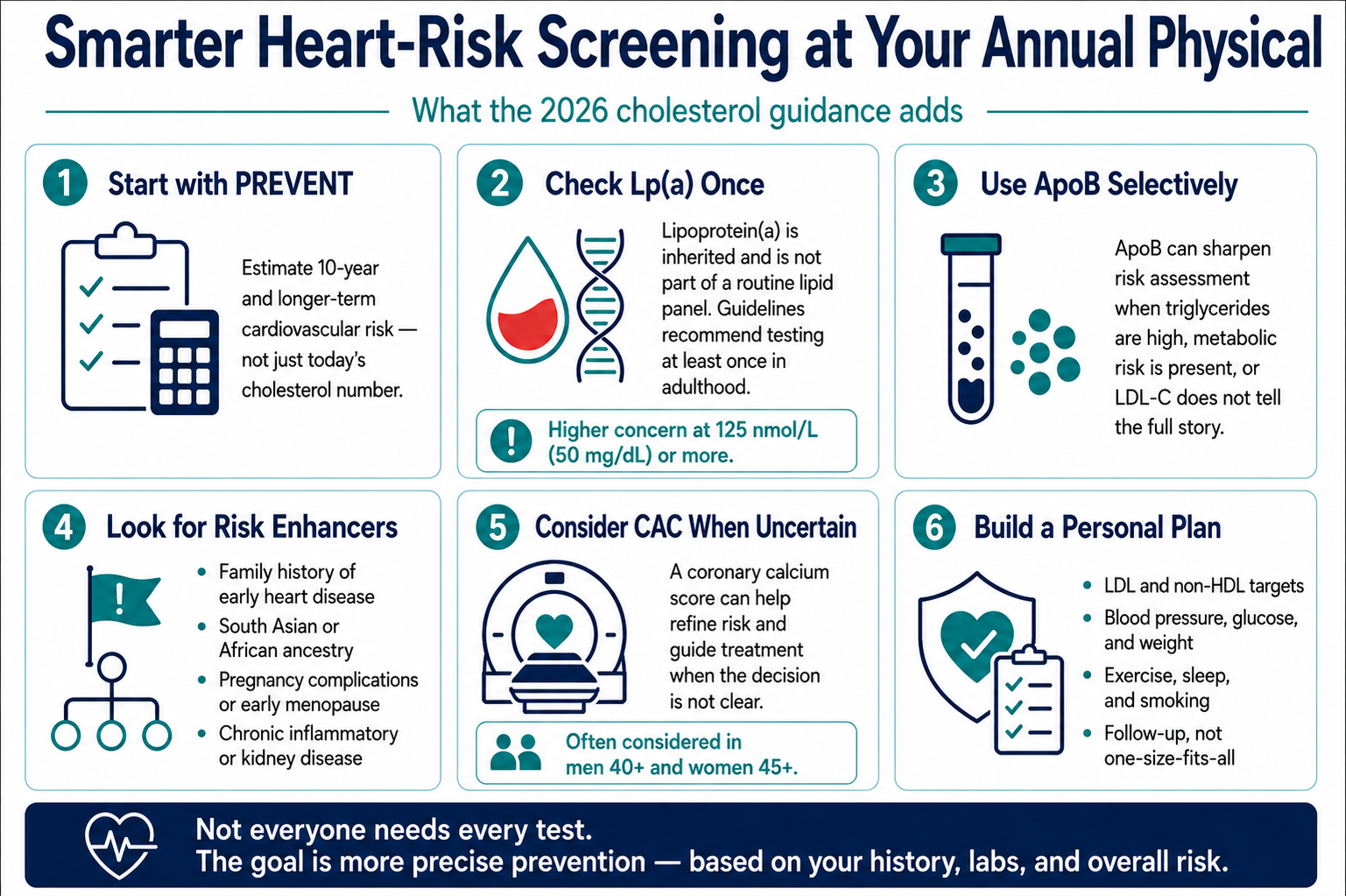
For some patients, a standard lipid panel and routine lifestyle counseling are enough. For others, family history, South Asian or Filipino ancestry, early menopause, preeclampsia or gestational diabetes, diabetes risk, chronic inflammatory disease, high triglycerides, or an elevated Lp(a) may change the conversation.
| 2026 cholesterol update | What it can mean during an annual physical |
|---|---|
| PREVENT risk model | For appropriate adults, clinicians can estimate both 10-year and longer-term cardiovascular risk instead of relying only on older calculators. |
| Lp(a) once in adulthood | Lp(a) is largely genetic. A high value can explain family patterns of early heart disease and may push clinicians to treat LDL risk more seriously. |
| Risk enhancers | Family history, pregnancy complications, early menopause, chronic inflammatory disease, and higher-risk ancestry can change the prevention plan. |
| ApoB and advanced lipid markers | Not for every patient, but useful when the standard cholesterol picture does not fully explain risk. |
| Coronary calcium scoring | Can help reclassify risk when the decision about treatment is unclear. This is not a routine screening test for everyone. |
| Supplement reality check | The guideline is clear that supplements are not a substitute for evidence-based cholesterol treatment when medication is needed. |
Risk is personal: family history, ancestry, and prevention in NYC
Most annual physicals treat prevention as if every patient starts from the same baseline. Real life is messier. A patient’s family history, ancestry, immigration background, pregnancy history, body composition, diet, sleep, stress, and environment can all change the prevention conversation.
This is not about reducing a person to an ethnic category. Ancestry is not destiny. But pretending that risk is identical for every patient is not modern medicine either. In a city as diverse as New York, preventive care cannot be generic.
| Patient factor | Why it can matter in preventive care |
|---|---|
| Family history of early heart disease | May justify earlier lipid discussion, Lp(a), ApoB, coronary calcium discussion, or cardiology referral depending on the full picture. |
| South Asian or Filipino ancestry | Recognized in the 2026 dyslipidemia guideline as examples of higher-risk ancestry that can influence cardiovascular risk assessment. |
| Asian ancestry and body composition | Diabetes and metabolic risk can occur at lower BMI thresholds in many Asian adults [LINK], so standard BMI cutoffs can understate metabolic risk. |
| Pregnancy history | Preeclampsia and gestational diabetes can signal higher long-term cardiometabolic risk. |
| Early menopause or chronic inflammatory disease | Can increase cardiovascular risk and may change how aggressively prevention is discussed. |
| Ashkenazi Jewish ancestry plus family history | May prompt discussion of inherited cancer risk when the family history fits, rather than treating cancer screening as one-size-fits-all. |
| African ancestry and lived environment | Hypertension and cardiovascular risk deserve careful, individualized discussion that includes family history, access, stress, sleep, diet, and measured blood pressure, not stereotypes. |
Modern preventive care without the testing circus
There is a growing market for executive physicals, longevity checkups, and advanced screening menus. Some of that is real medicine. Some of it is branding. Some of it is expensive noise.
At Atrium, we are not anti-testing. We are anti-random-testing. A calcium score, ApoB, Lp(a), sleep study, cancer screening test, hormone discussion, or advanced metabolic review can be very useful for the right patient. But the annual physical should not become a casino where every possible test is thrown at the wall just because it sounds sophisticated.
The better approach is clinical judgment: start with age, symptoms, family history, blood pressure, medications, weight trend, labs, lifestyle, and patient goals. Then decide what extra testing actually changes management.
Does an annual physical include X-rays or imaging scans?
A standard annual physical does not automatically include routine imaging like X-rays, ultrasounds, or CT scans. Preventive health guidelines generally recommend against ordering routine imaging for patients without active symptoms, as doing so increases costs and can lead to unnecessary anxiety over benign, incidental findings.
However, based on your specific age, medical history, risk factors, or complaints raised during the exam, Dr. Singh may selectively order targeted imaging as part of your broader diagnostic or surveillance plan. These are handled as separate, tailored orders rather than baseline physical components.
Cardiovascular imaging
If an irregular rhythm is noted or a patient presents with specific risk factors, an EKG can be performed in our Midtown office when clinically appropriate. For deeper structural evaluations, an echocardiogram or a Coronary Artery Calcium (CAC) score may be ordered at a trusted local imaging center when indicated
Bone density and body composition
A DEXA scan may be ordered when clinically appropriate to evaluate bone density. In selected body-composition contexts, DEXA may also provide useful metabolic information, but it is not a routine annual physical test for everyone.
Cancer screening imaging
Age-based cancer screening is reviewed and coordinated during the annual physical based on your age, sex, family history, symptoms, and prior screening history. This includes low-dose CT lung cancer screening for eligible current or former heavy smokers in the appropriate age range, screening mammography based on current guidelines and patient preference, and cervical cancer screening per USPSTF recommendations. These are not ordered as blanket baseline tests. Dr. Singh reviews what applies to you and coordinates referrals to trusted local imaging facilities.
Why annual physicals matter in your 30s and 40s
Many busy New Yorkers start to drift in their 30s and 40s without realizing it. Work gets heavier. Sleep gets shorter. Alcohol creeps up. Weight changes slowly. Blood pressure rises. LDL and ApoB may look more important once family history is considered. Women begin noticing perimenopause symptoms. Men notice fatigue and assume it is just stress. Colon cancer screening begins at 45 for average-risk adults. None of this is catastrophic in isolation. In aggregate, untreated, it compounds.
This is exactly when a good annual physical becomes valuable. Not because something is wrong. Because this is the window when small risk signals are still easy to reverse. A slightly elevated A1C caught at 38 is a lifestyle conversation. Caught at 52 after a diabetes diagnosis, it is a management problem. The same is true of blood pressure, LDL trajectory, body weight, sleep, alcohol use, and early perimenopause symptoms. The annual physical in your 30s and 40s is not a formality. It is one of the lowest-friction interventions in medicine.
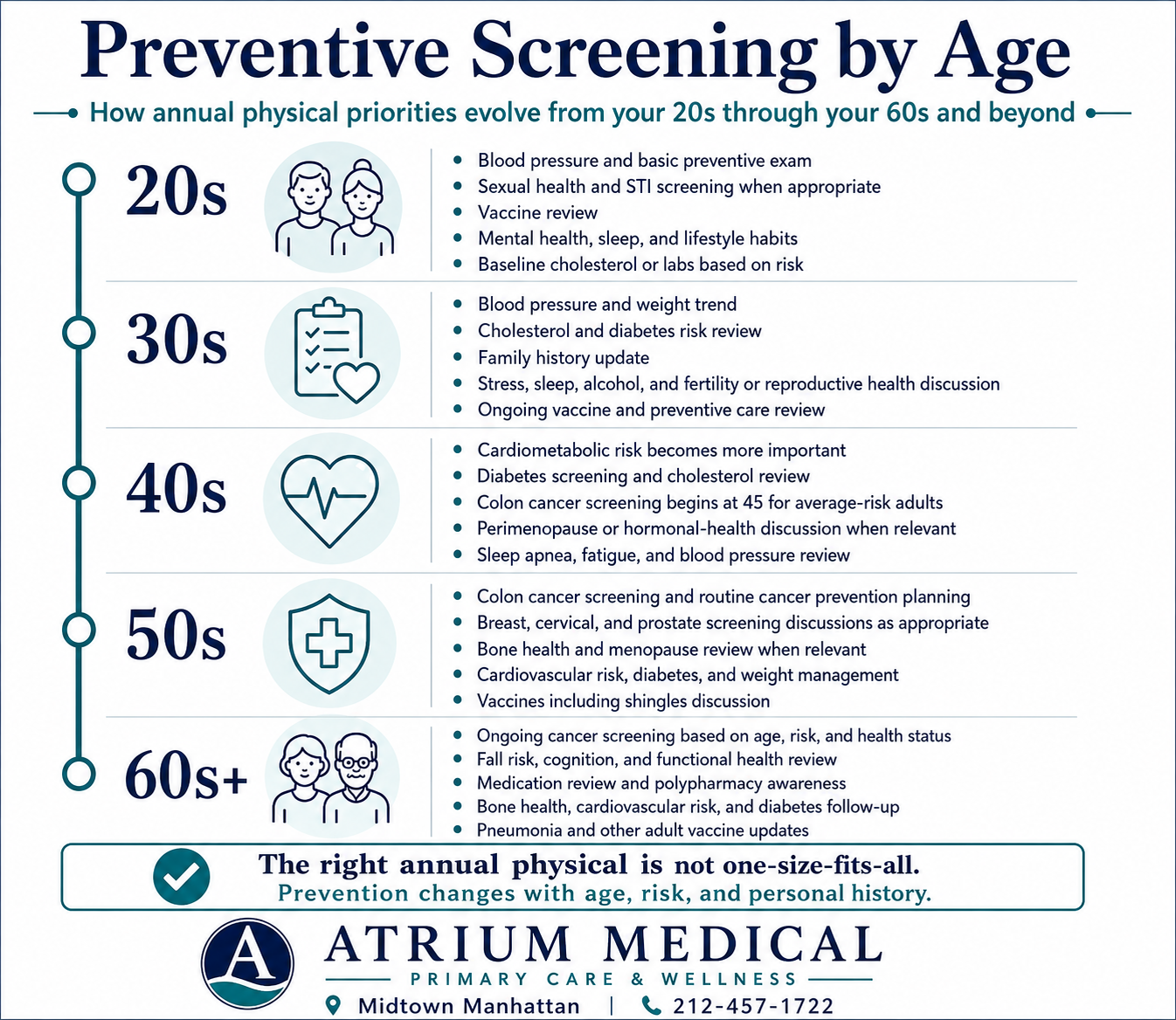
Screening by age and risk
Screening is not one-size-fits-all. The following is a practical overview, not a substitute for individualized medical advice
| Age range | Common annual physical priorities |
|---|---|
| 20s | Blood pressure, basic preventive exam, sexual health and STI screening when appropriate, vaccine review, mental health, sleep, lifestyle habits, and baseline cholesterol or labs based on risk. |
| 30s | Blood pressure and weight trend, cholesterol and diabetes risk review, family history update, stress, sleep, alcohol, fertility or reproductive health discussion, vaccines, and prevention planning. |
| 40s | Cardiometabolic risk becomes more important. Diabetes screening, cholesterol review, colon cancer screening beginning at 45 for average-risk adults, perimenopause or hormonal-health discussion when relevant, sleep apnea, fatigue, and blood pressure review. |
| 50s | Colon cancer screening and routine cancer prevention planning, breast, cervical, and prostate screening discussions as appropriate, bone health and menopause review when relevant, cardiovascular risk, diabetes, weight management, and shingles vaccine discussion. |
| 60s and beyond | Ongoing cancer screening based on age, risk, and health status, fall risk, cognition, functional health, medication review, polypharmacy awareness, bone health, cardiovascular risk, diabetes, pneumonia and other adult vaccine updates. |
Annual Physicals and your insurance company
Navigating the American health insurance system can be deeply frustrating. When you come in for an annual physical, you naturally want to discuss everything affecting your health. In fact, a good clinician will almost always ask what else is bothering you. That is thorough, compassionate medical care.
The confusion relates to how insurance companies handle those conversations behind the scenes. In the United States, commercial health insurance operates on a strict line between preventive health maintenance and problem-oriented medical care. An annual physical is defined by insurance carriers purely as a preventive visit: reviewing your overall health status and goals, going over family history and age-appropriate screening guidelines, vaccines, and other routine medical goals.
If the visit includes evaluating a new acute symptom or actively managing an existing chronic condition (by changing a dose or prescription, for example) insurance rules categorize that specific part of the visit as problem-oriented care. Clinicians cannot combine those distinct services under a single preventive checkup. Insurers like Aetna, Cigna, Blue Cross Blue Shield, and UnitedHealthcare require problem-oriented care to be coded separately, which can trigger your plan’s standard copay, deductible, or coinsurance.
This is not an extra charge added by Atrium. It is how health insurance works in the U.S.
Common Scenarios and How Insurance Handles Them
Routine Prevention: Age-appropriate screenings, vaccine updates, health history reviews, and lifestyle counseling.
Insurance Treatment: Covered at 100% as a preventive physical under eligible plans.
Problem-Oriented Care: Evaluating a new symptom (such as joint pain, headaches, or a rash), managing an existing condition, or adjusting a medication.
Insurance Treatment: Processed as a problem-oriented office visit, applying your plan’s standard copay, deductible, or coinsurance.
Diagnostic Testing: Blood work or imaging ordered specifically to investigate a symptom or monitor an active diagnosis.
Insurance Treatment: Processed as diagnostic testing. Outside facilities like LabCorp or Quest Diagnostics bill your insurance separately using diagnostic codes.
Addressing Common Misconceptions
“But it only took five minutes to talk about.” Insurance coding depends on clinical decision-making, not a stopwatch. Evaluating a symptom, reviewing medical risks, or adjusting a treatment or anything else that requires active medical judgment becomes treated as such under insurance rules.
“The older doctor never charged me for this.” A past experience under a different plan or provider has no real bearing on current insurance rules.
“You asked me if anything else was bothering me.” Asking about a patient’s overall health is fundamental to good medical practice, and bringing up a concern is always the right decision for your health. But addressing that new medical problem changes how your insurer categorizes that specific part of the visit. Your medical care remains unified in one room, but the insurance splits it into preventive and problem-oriented care. If you prefer, we are happy to schedule a separate follow-up visit (in person or via telehealth) to discuss any concerns that insurance would not consider “routine” or “preventative” so that the distinction is neatly preserved.
Why Accurate Documentation Matters
Clinicians are legally required to keep an accurate, detailed record of every consultation. Beyond compliance, precise documentation protects your access to downstream medical care:
Lab Tests: Outside laboratories reject insurance coverage if ordered blood work lacks a matching clinical reason in the medical chart.
Prescriptions: Insurers deny coverage or prior authorizations for medications if the medical record omits the rationale.
Referrals: Imaging centers and specialists require documented clinical reasons to approve insurance coverage.
Leaving discussions out of your chart does not save you money. It leads to denied lab claims, unexpected bills from third-party facilities, and delayed prescriptions.
“My insurance told me to ask the doctor to change the note.”
Insurance customer service representatives sometimes advise patients to ask their doctor to remove a code. This creates the mistaken impression that providers are choosing how visits are billed. Atrium corrects administrative errors immediately, but altering a patient’s chart solely to change a bill violates medical coding rules. If an issue that your insurance company considers “non-preventative” was evaluated or treated, the doctor’s medical note must reflect that clinical work. That is the law.
How to prepare and whether to fast
Most patients do not need to fast unless our office tells them to do so. Drink water, take your usual medications unless instructed otherwise, and bring the information that helps your clinician see the whole picture. If fasting labs are planned, our team will advise you in advance.
 Current medications and doses, including supplements
Allergies and prior reactions — see allergy testing at Atrium if relevant
Recent labs, imaging, or specialist notes if done elsewhere
Names of specialists you see
Family history of heart disease, cancer, diabetes, stroke, aneurysm, or sudden death
Vaccination records if available
Home blood pressure readings or wearable or device data if relevant
Specific questions you want answered
Your preferred pharmacy name and cross streets or mail-order pharmacy details for same-visit prescription routing
Immigration or childhood vaccine records if born outside the United States — this allows the clinical team to map adult vaccine needs accurately and avoid duplicate titer testing
Current medications and doses, including supplements
Allergies and prior reactions — see allergy testing at Atrium if relevant
Recent labs, imaging, or specialist notes if done elsewhere
Names of specialists you see
Family history of heart disease, cancer, diabetes, stroke, aneurysm, or sudden death
Vaccination records if available
Home blood pressure readings or wearable or device data if relevant
Specific questions you want answered
Your preferred pharmacy name and cross streets or mail-order pharmacy details for same-visit prescription routing
Immigration or childhood vaccine records if born outside the United States — this allows the clinical team to map adult vaccine needs accurately and avoid duplicate titer testing
The follow-up protocol: what happens when your labs reveal an issue
Closing the loop after your bloodwork is drawn is one of the most critical parts of preventive medicine. At Atrium Medical, we handle laboratory results differently depending on what they show.
Critical or panic values
If a lab result reveals an acute, immediate safety issue — such as severe electrolyte imbalances, profound anemia, or critically high blood sugar — our clinical team contacts you directly by phone immediately upon receiving the result to coordinate urgent medical intervention or medication adjustment.
Subclinical shifts and chronic drift
Many routine physical labs reveal intermediate issues: a slightly elevated HbA1c suggesting prediabetes, a lipid panel creeping in the wrong direction, mildly elevated liver enzymes, or a vitamin deficiency. These are not emergencies, but they require a deliberate response before they become harder to reverse.
For these findings, Atrium uses structured telehealth visits when the next step is discussion rather than an exam. Dr. Singh reviews the findings with you directly, explains what the numbers mean in practical terms, maps out a 3-to-6-month corrective plan, and schedules the follow-up retest. Patients do not need to take time off work or commute back to the Midtown office for what is essentially a lab review conversation.
NYC and Midtown Manhattan logistics
Atrium Medical is located at 160 East 56th Street, 12th Floor, in Midtown East. The office is close to the 59th Street subway hub, Grand Central, Park Avenue, Lexington Avenue, Third Avenue, Sutton Place, Turtle Bay, and the broader Midtown office corridor.
For busy professionals, the location matters. A physical is more likely to happen when it can fit into a real workday, before work, during lunch, or between meetings. That is why proximity, same-day primary care access, and follow-up by televisit when appropriate are part of the Atrium model.
Annual Physical FAQ
Yes. Many important health problems are silent at first, including high blood pressure, prediabetes, diabetes, high cholesterol, fatty liver disease, thyroid disease, sleep apnea, depression, and anxiety. The annual physical is how we catch signals before they become problems.
An annual physical usually includes medical history, family history, medication review, allergies, vital signs, physical exam, preventive labs when appropriate, vaccine review, cancer screening planning, cardiometabolic risk review, and lifestyle or mental health discussion based on your age and risk.
Bloodwork is common, but the exact labs depend on your age, medical history, symptoms, medications, risk factors, and insurance plan. Common labs may include a blood count, metabolic panel, cholesterol panel, A1C or glucose, thyroid testing when appropriate, and other risk-based tests.
You receive a bill when part of your visit addresses a specific, diagnostic medical issue alongside routine prevention. An annual physical covers routine checkups, screenings, and vaccines. If you discuss new symptoms, manage an ongoing condition, adjust medications, or receive a diagnostic script, insurance rules treat that portion as a separate office visit. This may generate a copay, deductible, or coinsurance based on your plan. Additionally, downstream care like blood work and prescriptions requires matching documentation in your chart to be covered by insurance. Atrium documents every visit accurately so outside labs and pharmacies can process your care cleanly. While we correct genuine billing errors, we cannot modify accurate medical records to alter insurance outcomes.
No. We are happy to review any claim for legitimate administrative or coding errors, but we cannot alter accurate medical records after the fact or submit claims that misrepresent a visit. To do so would adversely impact our patients in other ways, for example, insurance denials for medications, labs, specialist referrals, etc.
Often no. Many patients do not need to fast unless our office specifically asks them to. If fasting is needed for a particular lab plan, we will tell you in advance.
Yes, updating and reviewing your active medication list is a core component of a comprehensive annual physical. If your chronic conditions are well-controlled and you are up to date on all necessary safety monitoring labs, Dr. Singh can renew your maintenance prescriptions. However, if your exam or bloodwork reveals that a condition is uncontrolled, a separate diagnostic follow-up visit may be required to safely adjust dosages or switch medications.
Potentially, but they must be clinically justified. Routine preventive physicals cover standard screening panels like a lipid profile, complete blood count, and blood sugar markers. If you are experiencing specific symptoms such as severe fatigue, unexplained weight shifts, or hair loss, Dr. Singh can add targeted diagnostic tests. Note that while your insurance may cover standard preventive screening labs fully, any extra diagnostic labs ordered due to specific symptoms may be applied toward your deductible or copay.
A standard annual physical does not automatically include routine imaging. However, Dr. Singh may order targeted imaging based on your specific age, risk factors, or exam findings. EKGs can be done in our Midtown office. Other imaging such as DEXA scans, echocardiograms, or low-dose CT lung screening is coordinated at trusted local imaging centers.
Yes. Weight and metabolic health are appropriate topics at an annual physical. Dr. Singh reviews weight history, BMI trend, body composition context, metabolic labs, sleep, diet, medications, and lifestyle factors as part of the physical. If the conversation turns toward starting or adjusting a weight-loss medication, GLP-1 treatment planning, or complex obesity management, that may require a separate dedicated visit with enough time to do it properly.
Yes. Mental health is part of primary care. Many patients experience anxiety, depression, stress, sleep problems, or burnout as physical symptoms including fatigue, headaches, alcohol use, or concentration problems.
Yes. Sleep changes, hot flashes, mood symptoms, bleeding changes, weight changes, bone health, and cardiovascular risk can all be part of the annual physical conversation when relevant.
Often yes, if it is appropriate for your age, risk, and sexual history. If symptoms are present, the visit may become partly problem-focused.
Cancer screening depends on your age, sex, family history, symptoms, and prior screening history. Colon cancer screening generally begins at 45 for average-risk adults. Breast cancer screening is discussed based on current guidelines and patient preference. Cervical cancer screening follows USPSTF intervals. Prostate cancer screening involves a shared-decision-making conversation, particularly for men over 50 or earlier with relevant family history. Lung cancer screening with low-dose CT is recommended for eligible current or former heavy smokers in a specific age range. Skin cancer screening is discussed based on history and risk. Atrium reviews your current status at each physical and coordinates referrals and imaging as needed.
They can. The 2026 AHA/ACC cholesterol guidance emphasizes earlier and more personalized cardiovascular risk assessment, including PREVENT risk estimates for appropriate adults, Lp(a) testing at least once in adulthood, and risk enhancers such as family history and higher-risk ancestry. Selective use of ApoB or coronary calcium scoring is recommended when the risk picture is unclear. That does not mean every patient needs every test. It means the cholesterol conversation at your annual physical should be tailored to you, not a generic number check.
Yes. Lab review is one of the best uses of telehealth when the next step is discussion, medication adjustment, risk counseling, or follow-up planning rather than a hands-on exam. Patients do not need to come back into the Midtown office for a results conversation that can happen on video.
Timing depends on complexity, but patients should expect enough time for history, exam, risk review, and next-step planning. If multiple new medical problems are raised, follow-up may be needed.
Atrium may recommend repeat labs, medication changes, imaging, referral, a televisit, or an in-person follow-up depending on the finding. The point of the annual physical is not just detection. It is follow-through.
Medical sources and official references
This page was written and reviewed by Atrium Medical Primary Care using current official guidance, clinical literature, and government sources where applicable. Sources may be updated as guidelines change.
- USPSTF colorectal cancer screening recommendation
- 2026 AHA/ACC Guideline on the Management of Dyslipidemia
- CDC adult immunization schedule
- AHA Life's Essential 8
- PMC: Prediabetes and diabetes prevalence by ethnicity among U.S. Asian adults across BMI ranges
- USPSTF lung cancer screening recommendation
- USPSTF breast cancer screening recommendation
- USPSTF cervical cancer screening recommendation
- AHA PREVENT cardiovascular risk calculator
Book Your Annual Physical at Atrium Medical
Your annual physical is the easiest time to reset your prevention plan, review silent risk, update screening, and build a primary care relationship before something urgent happens. Atrium Medical is located at 160 East 56th Street, 12th Floor, in Midtown East Manhattan, convenient to the 59th Street subway hub and Grand Central. Book online or call 212-457-1722.