Urgent Care vs Primary Care: What’s the Difference?
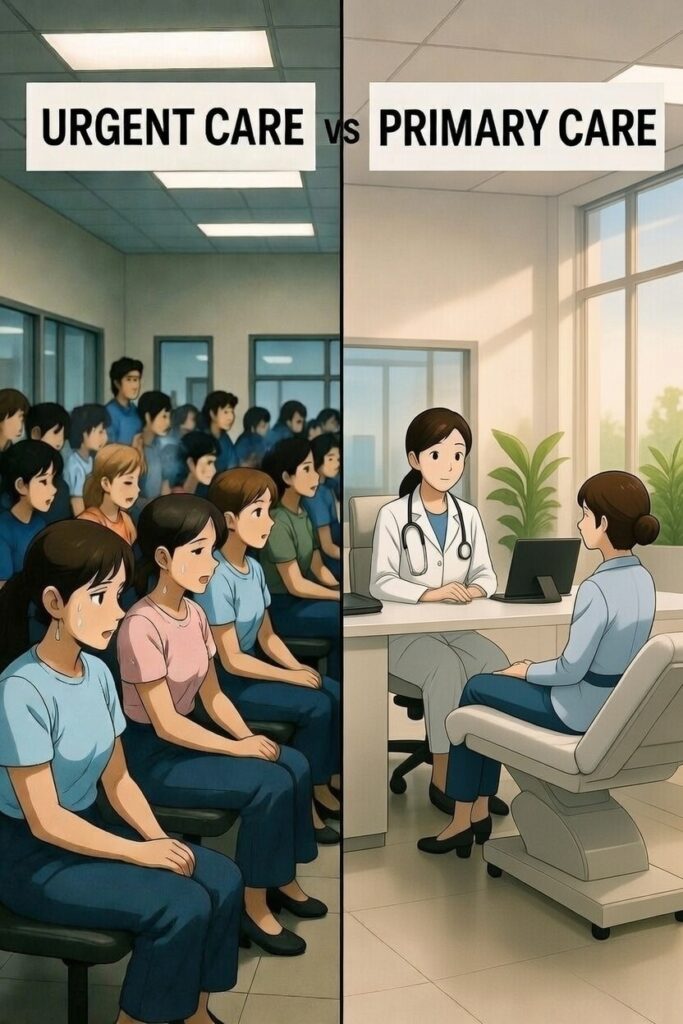
Many NYC patients go to urgent care because it feels faster and more available. But for a large number of common health concerns, a primary care visit can provide the same treatment with better continuity and follow-up.
Below are answers to the most common questions about urgent care vs primary care, and how to choose the right option in NYC.
What is urgent care?
Urgent care is a medical clinic designed for non-emergency medical problems that need attention quickly. It typically offers walk-in or short-notice visits and focuses on treating one-time issues. In NYC CityMD is one of the most well-recognized urgent care chains you may have seen.
What is primary care?
Primary care is your long-term medical home base. It includes preventive care, sick visits, medication management, chronic condition management, and follow-up over time, usually led by an internal medicine physician or family medicine clinician.
What is the biggest difference between urgent care and primary care?
The main difference is continuity.
Urgent care is designed for quick, one-time treatment. Primary care is designed for ongoing care, follow-up, and prevention.
Why do so many people use urgent care in NYC?
Because:
hospital systems often have long wait times for PCP visits
urgent care appears prominently in online “near me” searches
it feels easier and faster
many patients assume primary care can’t see them soon enough
Can primary care treat the same issues as urgent care?
Often, yes. Many issues treated at urgent care can also be treated at a primary care office, including:
sore throat / possible strep
sinus infection symptoms
cough and mild respiratory infections
UTI symptoms
rash / eczema / dermatitis
mild asthma flare-ups
blood pressure checks
medication refills (when appropriate)
STD testing
HIV testing and PrEP visits
When is urgent care a good choice?
Urgent care can be a good option if:
your symptoms are urgent but not life-threatening
it’s evening or weekend and your doctor is closed
you need a quick visit for a simple problem
you can’t find a near-term appointment elsewhere
When is primary care a better choice?
Primary care is often the better option when:
you want follow-up and continuity
your symptoms are recurring or unclear
you need labs interpreted and tracked over time
you want preventive care and screening
you want coordinated referrals and ongoing management
Is urgent care the same as the emergency room?
No. Emergency rooms are for life-threatening symptoms.
Go to the ER or call 911 for symptoms like:
chest pain
severe shortness of breath
signs of stroke
severe abdominal pain
uncontrolled bleeding
major trauma
Is urgent care faster than primary care?
Sometimes, but not always. In NYC, some primary care practices offer same-day availability, online booking, and telehealth, which can be as fast (or faster) than urgent care.
Is urgent care more expensive than primary care?
It depends on your insurance plan and deductible. Some urgent care visits cost more than office visits, and additional testing and repeated visits can add up. Primary care may reduce costs over time by improving prevention and follow-up.
Can urgent care prescribe antibiotics faster?
Urgent care may prescribe antibiotics quickly, but faster isn’t always better. Many sore throats and sinus symptoms are viral, and antibiotic-resistant “super bugs” are an unfortunate consequence of antibiotic overuse even when it is not medically indicated. This is why urgent cares are sometimes called “pill facories” or “medication vending machines”. Primary care can often provide more accurate evaluation, appropriate testing, and safer prescribing.
What are the downsides of urgent care?
Urgent care can be helpful, but common downsides include:
different provider each visit
limited follow-up
records not integrated with your long-term care
less prevention and screening
less support for complex or recurring problems
What are the advantages of primary care?
Primary care offers:
consistent clinicians who know your history
better follow-up and continuity
prevention and long-term risk reduction
better coordination of labs and imaging
better management of chronic conditions
What if I just need one quick visit and don’t have a primary care doctor yet?
That’s common, especially in NYC. Many patients start with an urgent issue visit (UTI symptoms, sore throat, rash, etc.) and then decide whether they want to establish ongoing care.
If I’m not sure, urgent care or primary care: what should I do?
If symptoms are not an emergency, book the fastest appropriate visit you can. A good clinician can tell you if you need urgent testing, specialist care, or ER evaluation.
Is Atrium Medical an urgent care?
No. Atrium Medical is an internal medicine primary care practice. However, we can often see patients quickly for many issues people commonly go to urgent care for, while offering long-term continuity and follow-up.
Can Atrium Medical be an urgent care alternative in NYC?
In many cases, yes. Patients commonly see us for:
UTI symptoms
respiratory symptoms
sore throat / possible strep
sinus symptoms
rashes
fatigue and general medical concerns
STD/HIV testing
PrEP visits
preventive care and physicals
Availability varies, but we aim to offer same-day or same-week appointments whenever possible.