
PEPTIDE THERAPY | PHYSICIAN EVALUATION | MIDTOWN MANHATTAN, NEW YORK CITY
Peptide Therapy in NYC: A Physician’s Guide to the Science, Hype, and Safety Questions
Published by
Dr. Shilpa Paradkar Singh, MD
Last Updated: September 2026
- Physician-Led
Clinical Evaluation First
- Evidence Ladder
No gray market science
- Safety Review
Risks, Labs, Sourcing
- Midtown East
160 East 56th Street
Fast answer
Peptides are real medicine. Peptide marketing is the problem. At Atrium Medical in Midtown Manhattan, we start with the problem, not the product. GLP-1 medications created a halo effect around the entire peptide category. That halo does not extend to every compound sold online as a wellness peptide, biohacking stack, or research-use injectable.
Some peptide-based medicines are among the most important therapies in the world. Insulin is a peptide. FDA-approved GLP-1 medications are peptide-based. Tesamorelin is a real FDA-approved drug for a narrow indication. But other compounds marketed as peptide therapy may be compounded, experimental, research-use, cosmetic, or supplement-like, with claims that run far ahead of the evidence.
Before asking which peptide should I take, the better question is: what problem are we actually trying to solve, and is a peptide the right answer at all?
Atrium Medical is located at 160 East 56th Street, 12th Floor, near the 59th Street subway hub and Grand Central. To discuss peptide therapy questions with a physician-led primary care practice, request a consultation or call 212-457-1722.
On This Page
- Why peptides suddenly went mainstream
- What patients are usually asking peptides to fix
- What a peptide actually is
- Why peptide therapy is not one thing
- The peptide evidence ladder
- Why route and source matter: topical, oral, nasal, injectable, prescription, research-use
- Before peptides, check these first
- Peptide examples patients ask about
- Retatrutide: real peptide science, not internet peptide hype
- GLP-1s are the proof of concept, not a blank check
- Tesamorelin: real medicine, narrow indication
- BPC-157, TB-500, and recovery peptides
- CJC-1295, ipamorelin, sermorelin, and the growth hormone axis
- MOTS-c, mitochondrial peptides, and exercise-mimetic claims
- Topical peptides, collagen peptides, and skincare claims
- Regulatory reality: FDA, compounding, and research-use peptides
- Who may not be a good candidate
- Red flags in peptide marketing
- Safety concerns patients should understand
- What a peptide consultation at Atrium includes
- Insurance, self-pay, and pricing expectations
- What Atrium does not do
- Peptide Therapy FAQ
Why peptides suddenly went mainstream
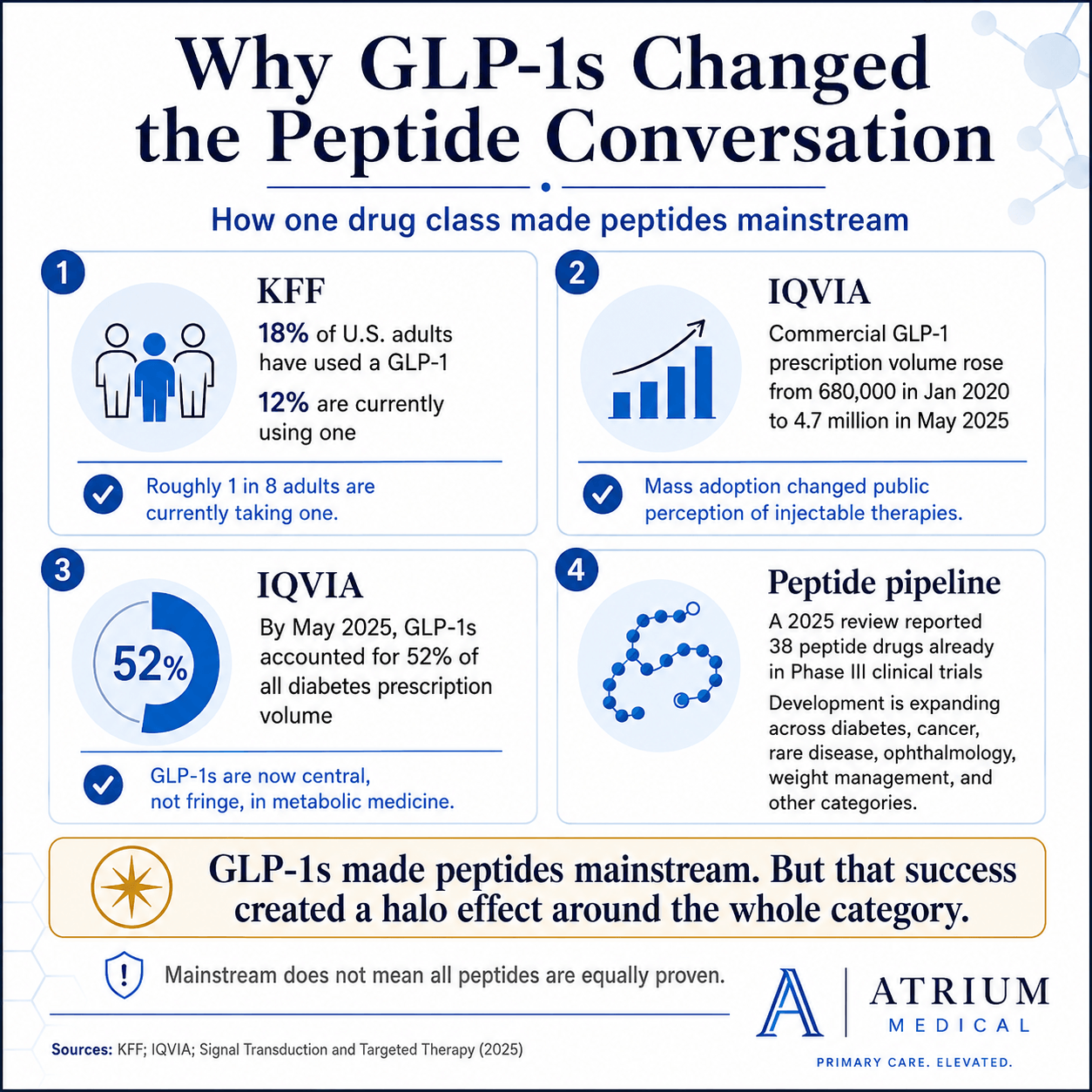
The public did not suddenly become interested in amino acid chains because everyone started reading biochemistry papers. GLP-1 drugs made the category visible. KFF found that 18% of U.S. adults say they have used a GLP-1 drug and 12% are currently using one. That is roughly one in eight adults currently taking a GLP-1.
That matters because GLP-1s created a halo effect around the entire peptide category. Patients now hear peptide and assume the rest of the market has the same evidence, safety, and regulatory clarity as insulin, semaglutide, or tirzepatide. It does not.
At the same time, peptide-based drug development is real. A 2025 review in Signal Transduction and Targeted Therapy reported 38 peptide drugs already in Phase III clinical trials across diabetes, cancer, rare disease, and weight management. Peptides are not fringe. They are already medicine. But that does not make every peptide sold online good medicine.
What patients are usually asking peptides to fix
Patients rarely walk in asking for peptide therapy in the abstract. They are trying to solve a specific problem. Understanding which problem shapes the entire clinical evaluation — because each goal requires a different workup before any peptide discussion makes sense.
| What patient is trying to fix | What needs to be evaluated first before peptides |
|---|---|
| Weight loss or metabolic health | A1C, insulin resistance, thyroid, sleep apnea, medications, alcohol, body composition, GLP-1 eligibility. |
| Injury recovery or joint/tendon pain | Actual diagnosis first: tendon, ligament, joint, nerve, inflammatory or autoimmune disease. Physical therapy status, vitamin D, nutrition, overtraining, sleep. |
| Fatigue, brain fog, or low performance | Anemia, thyroid disease, B12/iron deficiency, sleep apnea, depression, anxiety, medication side effects, alcohol, cannabis, perimenopause or testosterone when clinically appropriate. |
| Body composition, muscle, or aging | Baseline metabolic labs, muscle mass context, resistance training status, protein intake, sleep, GH axis safety review if applicable. |
| Skin, hair, or cosmetic goals | Understand topical vs systemic distinction. Nutrition, thyroid, iron, scalp/skin condition evaluation. |
| Longevity or biohacking curiosity | Evidence review, risk discussion, realistic outcome discussion. Most longevity peptide claims live on the animal-data rung of the evidence ladder. |
| Low libido or sexual performance | Testosterone when appropriate (including free testosterone, not just total), medications, depression and anxiety, sleep apnea, alcohol, relationship factors, vascular risk, diabetes, and thyroid disease. Peptide claims in this space are often weakly supported by evidence. |
What a peptide actually is
A peptide is a short chain of amino acids. Proteins are longer chains. Peptides are smaller biological messages that can interact with receptors, hormones, immune pathways, tissue repair pathways, metabolism, and cell signaling.
The word peptide can describe a lifesaving medicine, a hormone-like injectable, a cosmetic ingredient, a collagen powder, a research chemical, or a compound being discussed in a longevity clinic. The word alone tells you almost nothing about evidence, safety, or appropriate use. The real medical questions are: what is it for, who studied it, who should not use it, where is it made, how is it dosed, what are the risks, and what outcome are we measuring?
Why peptide therapy is not one thing
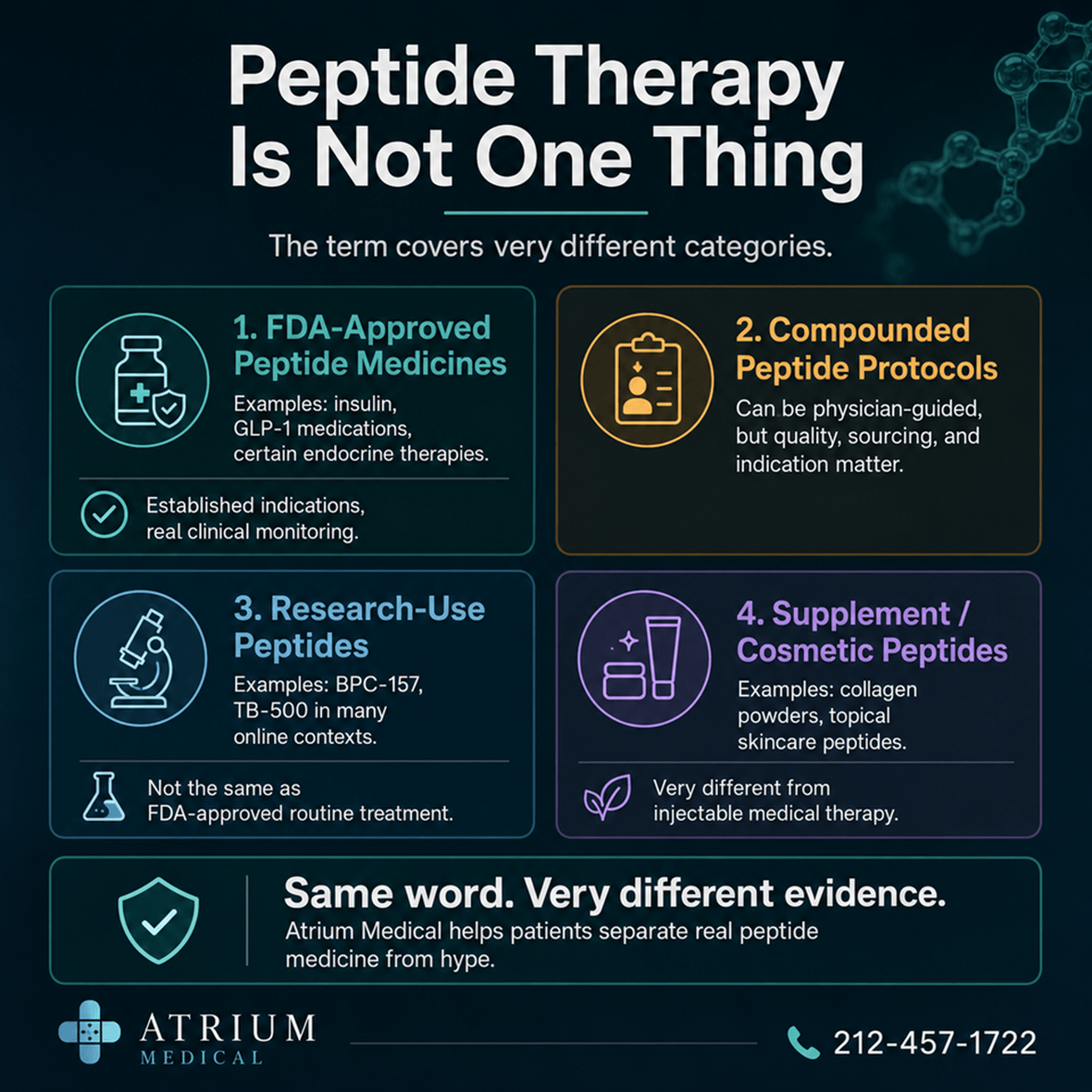
Peptide therapy is not one medical category. It is a marketing term that now covers multiple categories with very different levels of evidence.
| Category | Examples | What patients should know |
|---|---|---|
| FDA-approved peptide or peptide-like medicines | Insulin, GLP-1 medications, tesamorelin for HIV-associated lipodystrophy, certain endocrine therapies. | These are real medicines with defined indications, labeling, dosing, risks, and regulatory oversight. |
| Compounded peptide protocols | Varies by pharmacy and physician protocol. | Compounding may have a role in some settings, but quality, legality, sourcing, evidence, and monitoring matter. |
| Research-use or gray-market peptides | Products sold online as research-only BPC-157, TB-500, retatrutide, or other injectables. | Not manufactured for patient use. Unknown purity, sterility, dosing, and safety. Patients should not inject these. |
| Supplement or cosmetic peptides | Collagen peptides, topical GHK-Cu, Matrixyl, Argireline, skincare peptides. | Different category. Often local, nutritional, or cosmetic use, not systemic injectable pharmacology. |
The peptide evidence ladder
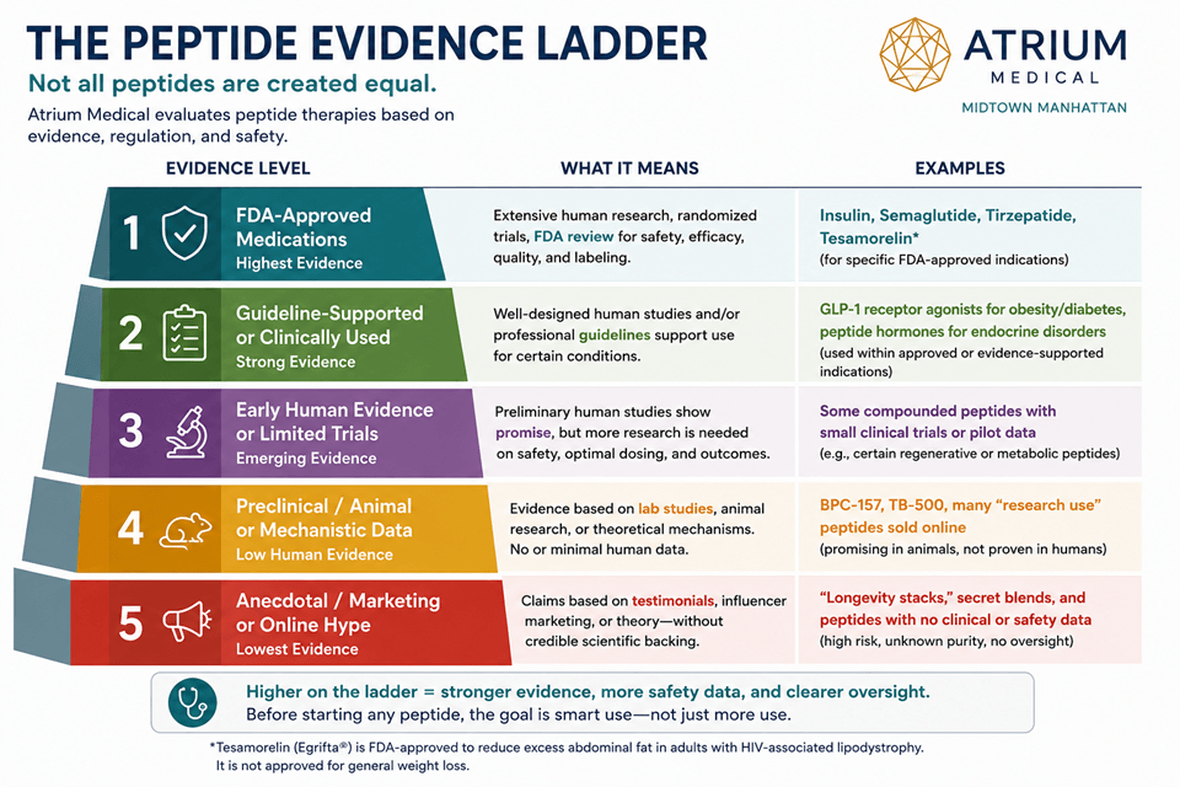
Atrium thinks about peptides on an evidence ladder. This is the opposite of a peptide menu. It starts with evidence, not hype.
| Evidence level | What it means | Examples or notes |
|---|---|---|
| 1. FDA-approved medicine | Specific indication, label, dosing, safety data, regulatory oversight. | Insulin, FDA-approved GLP-1 medications, tesamorelin for HIV-associated lipodystrophy. |
| 2. Guideline-supported or established clinical use | Accepted medical use in a defined context. | Depends on condition and indication. Not all clinician use is the same as wellness marketing. |
| 3. Human clinical evidence, but limited or narrow | Trials exist but may be small, short-term, or not generalizable. | Some peptide candidates or narrow-use compounds. Requires careful interpretation. |
| 4. Animal, mechanistic, or early research evidence | Biology is plausible, but patient outcomes are not established. | Many recovery, mitochondrial, and longevity peptide claims live here. |
| 5. Anecdote and online marketing | Testimonials, protocols, stacks, and influencer claims without clinical validation. | This is where patients can waste money or take real risk. |
Why route and source matter: topical, oral, nasal, injectable, prescription, research-use
The word peptide collapses too many different products into one bucket. Route of delivery and source of the compound are not secondary details. They define the risk category entirely.
| Route or source | What it means for risk and evidence |
|---|---|
| Topical peptides | Mostly cosmetic or local-effect claims. Skin is a barrier. Many peptides have limited systemic penetration. Lower risk than injectables, but marketing often overstates effect size. |
| Oral collagen peptides | Nutrition and supplement category, not hormone signaling. Digestion breaks down amino acid chains. Some modest joint and skin data exist. Not equivalent to prescription peptide drug development. |
| Nasal peptides | Absorption and dosing are often unpredictable. Many are not approved for claimed uses. Some nootropic nasal peptides are widely discussed online without meaningful human safety data. |
| Prescription injectables (pharmacy-dispensed) | Highest systemic bioavailability and signaling potential. When FDA-approved and pharmacy-dispensed, these carry known labels and monitoring requirements. Requires physician oversight. |
| Research-use injectables (online) | Sold as not for human consumption. Unknown purity, sterility, dose, immunogenicity, and contamination risk. Patients should not inject these regardless of how they are labeled or marketed. |
A patient buying an oral collagen supplement and a patient injecting a research-use peptide vial ordered online are in completely different risk categories, even if they both use the word peptide to describe what they are doing.
Before peptides, check these first
This is where Atrium’s primary care model matters most. A peptide should not be used to avoid making a diagnosis. Before any peptide discussion, the clinical question is: what is actually driving the symptom, and has it been properly evaluated?
For fatigue, brain fog, or low performance
- Anemia and iron deficiency
- Thyroid disease (hypo or hyper)
- B12 or vitamin D deficiency
- Sleep apnea
- Depression or anxiety
- Medication side effects
- Alcohol or cannabis use
- Perimenopause or testosterone issues when clinically appropriate
For poor recovery or injury symptoms
- Actual diagnosis first: tendon, ligament, joint, nerve, inflammatory, or autoimmune disease
- Physical therapy status and adherence
- Vitamin D, nutrition, overtraining, sleep quality
- Inflammatory or autoimmune markers when the history supports it
For weight gain or metabolic drift
- A1C and insulin resistance
- Thyroid function
- Medications that cause weight gain
- Sleep apnea
- Alcohol use
- Menopause or perimenopause
- Body composition and muscle loss context
If a clinic moves to peptides without asking any of these questions, that is a red flag, not a selling point.
Peptide examples patients ask about
| Peptide or category | Why patients ask | Atrium perspective |
|---|---|---|
| GLP-1s: semaglutide and tirzepatide | Weight loss, diabetes, insulin resistance, cardiometabolic health. | Real medicine with approved indications and monitoring needs. Covered in detail on the GLP-1 medical weight loss page. |
| Tesamorelin | Visceral fat, growth hormone axis, body composition. | FDA-approved for reduction of excess abdominal fat in adults with HIV-associated lipodystrophy. Not approved for general weight-loss management. Narrow evidence matters. |
| BPC-157 and TB-500 | Injury recovery, tendon pain, tissue repair, sports performance. | Popular online, but not FDA-approved routine treatments for injuries. Enthusiasm is ahead of human outcome evidence. Sourcing and safety are major concerns. |
| CJC-1295, ipamorelin, sermorelin | Growth hormone axis, recovery, sleep, body composition. | Requires endocrine context, medical history, risk discussion, regulatory awareness, and rigorous metabolic monitoring including glucose and IGF-1. Not a casual anti-aging stack. |
| MOTS-c and mitochondrial peptides | Energy, metabolism, exercise-mimetic claims. | Interesting research area. Not a substitute for diagnosing fatigue, sleep disorders, thyroid disease, anemia, depression, or metabolic disease. |
| GHK-Cu and topical peptides | Skin, hair, collagen signaling, wound repair. | Topical and cosmetic peptide use is different from systemic injections. Some biologic plausibility, but beauty marketing often overstates the effect size. |
| Retatrutide and next-generation metabolic peptides | Triple-agonist weight-loss data, next-generation obesity medicine, social media hype. | Investigational GLP-1, GIP, and glucagon receptor triple agonist with strong Phase 3 obesity data, but not commercially approved. Online research-use retatrutide is not equivalent to a studied drug. |
Retatrutide: real peptide science, not internet peptide hype
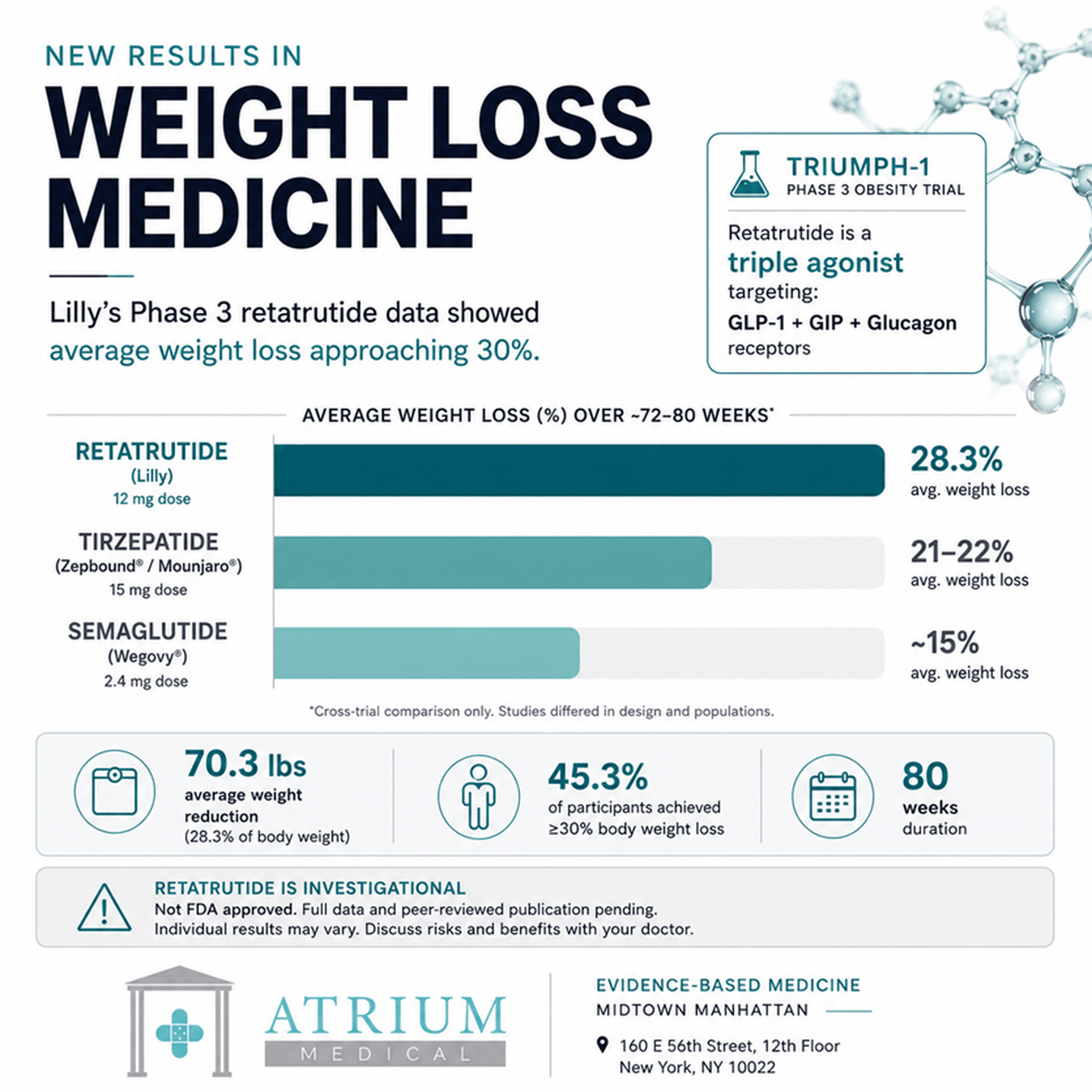
Retatrutide is a useful example of why peptide therapy cannot be treated as one bucket. It is a peptide-based investigational metabolic medicine designed to activate GLP-1, GIP, and glucagon receptors simultaneously. That is very different from a vial sold online as a research chemical with unknown purity, dosing, sterility, or clinical oversight.
Lilly reported Phase 3 TRIUMPH-1 obesity data showing 28.3% average weight loss at 80 weeks in the 12 mg retatrutide group, with 45.3% of participants achieving at least 30% body weight loss. Those are major data. But the lesson is not to chase an online version of retatrutide.
The lesson is the opposite: when a peptide-based drug is powerful, it needs formal trials, careful dosing, side-effect tracking, contraindication review, long-term follow-up, and regulatory oversight. Retatrutide is still investigational, and research-use products marketed online are not equivalent to the pharmaceutical molecule studied in controlled trials. Sources: Reuters Phase 3 report and Lilly investor disclosure.
GLP-1s are the proof of concept, not a blank check
GLP-1 medications prove something narrow and important: targeted metabolic signaling can be powerful when the molecule, dose, indication, safety profile, and monitoring are properly studied. GLP-1 success does not validate the entire peptide marketplace.
That is why Atrium does not treat peptide as a magic word. We ask what pathway is being targeted, what evidence exists, and whether the patient would be better served by an approved therapy, a conventional diagnosis, or a different plan entirely.
Tesamorelin: real medicine, narrow indication
Tesamorelin is a synthetic growth hormone-releasing hormone analogue. It is FDA-approved for reducing excess abdominal fat in adults with HIV-associated lipodystrophy. That is a real indication with human trial data.
But that does not make tesamorelin a general weight-loss drug. The FDA label states it is not indicated for weight-loss management and notes that long-term cardiovascular safety has not been established. One properly studied peptide does not prove that every growth-hormone-axis protocol is appropriate for every patient with belly fat, fatigue, or age-related body composition changes.
BPC-157, TB-500, and recovery peptides
BPC-157 and TB-500 are often marketed together as a recovery or repair stack, but they are different compounds with different proposed mechanisms and different evidence gaps. Lumping them together obscures the clinical picture.
Both are popular online for tendon injuries, joint pain, muscle recovery, and tissue repair. Much of the enthusiasm comes from animal data, mechanistic reasoning, anecdote, and online protocols rather than large, controlled human trials. A 2025 narrative review concluded that despite preclinical regenerative findings and wide popularity, human data for BPC-157 remain minimal and it should be considered investigational until well-designed clinical trials are completed.
The more important clinical point about BPC-157 specifically: it promotes tissue repair partly through angiogenesis, or new blood vessel formation, in preclinical models. That does not prove cancer risk in humans — the evidence is still largely preclinical and the human data remain minimal. But it is exactly the kind of biologic activity that makes clinicians ask about cancer history, unexplained symptoms, and age-appropriate cancer screening before any advanced discussion of systemic use. A clinic that does not ask those questions before selling a recovery peptide is not doing a serious medical evaluation.
A physician-led conversation should start with the actual diagnosis: tendonitis, ligament injury, inflammatory disease, nerve pain, arthritis, overtraining, metabolic disease, or sleep deprivation. Treating every pain problem as a peptide problem is bad medicine.
CJC-1295, ipamorelin, sermorelin, and the growth hormone axis
Growth-hormone-axis peptides are marketed for recovery, sleep, muscle, fat loss, and aging. This category deserves serious caution because the GH and IGF-1 system is not a lifestyle dial.
Artificially altering the growth hormone axis can worsen insulin resistance in susceptible patients, raise fasting blood glucose toward prediabetic or diabetic range, cause fluid retention or peripheral edema, and contribute to carpal tunnel symptoms. These are not rare theoretical concerns — they are recognized adverse effects that any serious GH-axis protocol must monitor with baseline and follow-up labs including fasting glucose, HbA1c, and IGF-1 levels.
This caution applies equally to sermorelin and other GH-axis secretagogue protocols. An executive taking a CJC/ipamorelin stack to lean out can inadvertently push themselves into prediabetes while attributing fatigue and fluid retention to something else entirely.
The conversation should include baseline health, medical history, cancer history, glucose and insulin risk, sleep apnea risk, regulatory status, sourcing, and a clear monitoring plan. If no one is talking about those issues, the protocol is not serious medicine.
MOTS-c, mitochondrial peptides, and exercise-mimetic claims
Mitochondrial peptides sit at the intersection of metabolism, aging, exercise biology, and cellular stress — which is also why they attract hype. Claims that a peptide can act like exercise or fix energy production are appealing to patients who feel tired or plateaued.
Fatigue and low performance can come from sleep deprivation, anemia, thyroid disease, depression, medication effects, overtraining, alcohol, menopause, sleep apnea, insulin resistance, or under-fueling. A peptide should not be used to avoid making that diagnosis.
Peptides, perimenopause, and body composition
Some women ask about peptides for weight gain during perimenopause, sleep changes, fatigue, skin, libido, or body composition. Those symptoms deserve a real clinical evaluation first: sleep quality, thyroid function, iron and B12 status, mood and anxiety, bleeding pattern changes, insulin resistance, alcohol use, cardiovascular risk, and menopause status. Peptides should not become a shortcut around diagnosing what is actually changing. A primary care evaluation before any peptide conversation is not a detour — it is the point.
Topical peptides, collagen peptides, and skincare claims
Topical skincare peptides such as GHK-Cu, Matrixyl-type palmitoylated peptides, and Argireline-type peptides are real peptide molecules, but they are not the same as systemic injectable therapy. Skin is a barrier, and many peptides are large, hydrophilic, or unstable, so cosmetic chemists modify them to improve penetration.
A note on oral peptide supplements: digestive enzymes break down amino acid chains, which is a major scientific limitation for many oral peptide claims. Some drugs are specifically engineered around this problem through protective coatings or modified absorption mechanisms. Most oral collagen or peptide supplement claims are not equivalent to prescription drug development.
The right framing: topical and oral cosmetic peptides may be low-risk adjuncts. They are not magic anti-aging molecules, and they are a different risk category from injectable systemic peptides.
Regulatory reality: FDA, compounding, and research-use peptides
| Product type | What it means | Patient risk |
|---|---|---|
| FDA-approved medication | Approved for a specific indication with label, dose, warnings, and manufacturing oversight. | Known label, dose, warnings, monitoring requirements. Highest regulatory clarity. |
| Legitimate compounded medication | Prepared by a pharmacy under compounding rules when clinically appropriate and compliant. | Not FDA-approved as a finished product. Quality depends on pharmacy compliance and sourcing. Still requires physician oversight. |
| Research-use chemical | Sold for lab or research use, not patient treatment. Often labeled not for human consumption. | Unknown purity, sterility, dose, immunogenicity, and safety. Patients should not inject these. |
| Online peptide stack | Often marketed through wellness, biohacking, or social media channels. May combine multiple substances. | High risk of overclaiming, contamination, missed diagnosis, no monitoring, no prescriber accountability. |
The FDA specifically warns consumers not to buy unapproved GLP-1 products labeled for research purposes or not for human consumption, including products containing semaglutide, tirzepatide, or retatrutide. The FDA has also identified safety concerns for certain bulk peptide substances used in compounding, including concerns around immunogenicity, peptide-related impurities, and API characterization.
Atrium Medical does not prescribe research-use-only chemicals, gray-market peptides, or compounded peptide mixtures that cannot be sourced through a compliant pharmacy pathway.
Legal access is not the same as good medicine
A peptide can be available, biologically plausible, and still not be appropriate for a specific patient. A legal prescription pathway does not automatically mean a treatment has proven benefit for the goal being advertised. Pharmacy sourcing matters, but sourcing alone does not create evidence. A product being available through a licensed clinician does not mean every patient asking for it is a good candidate.
Who may not be a good candidate for elective peptide therapy
- Patients who are pregnant, breastfeeding, or actively trying to conceive.
- Patients with active cancer or who have not completed age-appropriate cancer screening.
- Patients with uncontrolled diabetes, hypertension, sleep apnea, kidney disease, or liver disease.
- Patients with active eating disorder history or body dysmorphia.
- Patients with unexplained symptoms that have not been clinically evaluated.
- Patients seeking a prescription to ratify an online peptide stack they already purchased.
- Patients who want a protocol without lab monitoring, follow-up, or stop criteria.
This does not mean these patients can never have a peptide discussion. It means they need an actual medical evaluation, not a shopping cart.
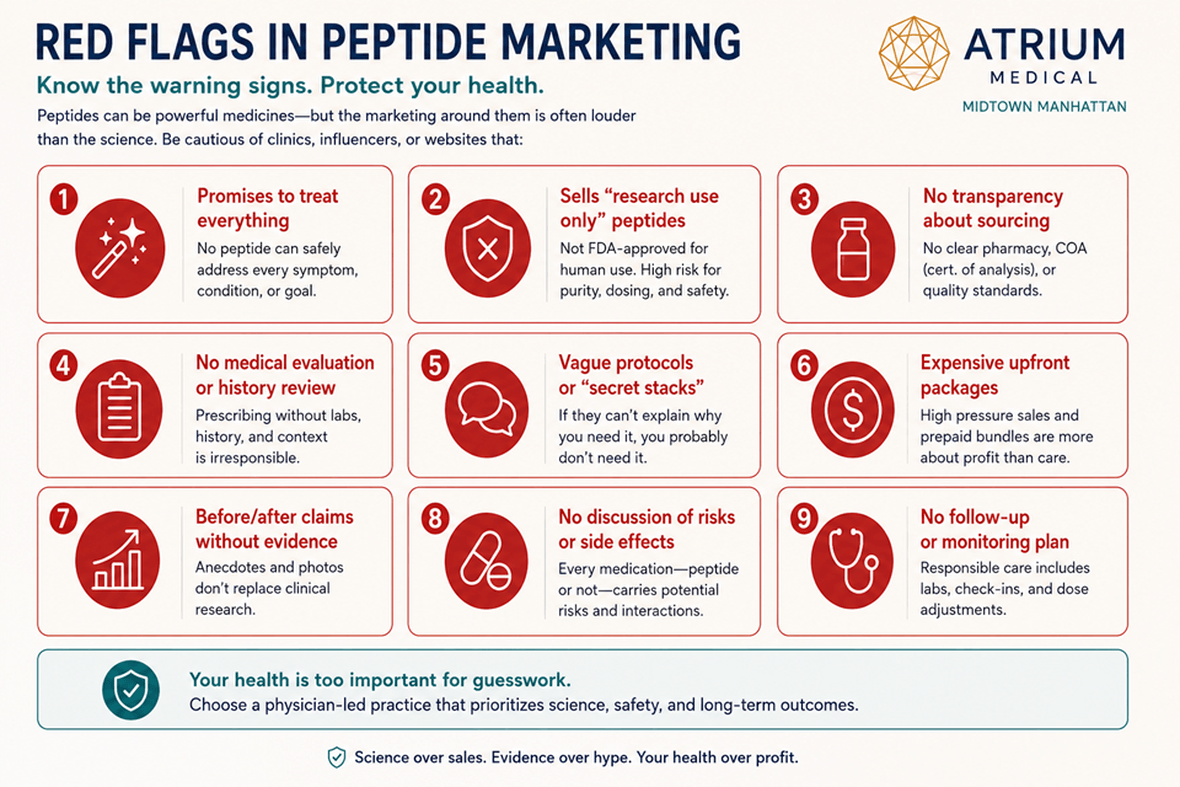
Red flags in peptide marketing
- A clinic says one peptide stack can fix aging, libido, recovery, fat loss, skin, focus, sleep, and inflammation.
- The product is labeled research use only or not for human consumption but is sold with dosing instructions.
- No one reviews medical history, cancer history, medications, fertility status, or cancer screening status.
- There is no pharmacy transparency, no prescription process, and no monitoring plan.
- • The pitch relies on before-and-after stories, influencer language, or claims too broad to test.
- The protocol includes multiple peptides at once, making it impossible to know what helped or hurt.
- No one explains what outcome will be measured, how long the trial will last, or when to stop.
Safety concerns patients should understand
| Risk type | What can go wrong | Why it matters |
|---|---|---|
| Product risk | Unknown purity, contamination, wrong dose, unlisted ingredients, sterility problems. | A peptide from an anonymous website is not equivalent to a prescription product from a legitimate pharmacy. |
| Biological risk | Hormone signaling, immune effects, blood vessel growth, cell growth pathways, glucose effects, or fluid retention. | These are not harmless wellness sprinkles. They interact with real physiological systems. |
| Missed-diagnosis risk | Fatigue, low libido, pain, weight gain, brain fog, or poor recovery may have another cause. | A peptide protocol can delay the diagnosis that actually needed treatment. |
| Monitoring risk | No baseline labs, no symptom tracking, no stop criteria, no cancer screening review, no follow-up. | Without monitoring, patients cannot tell whether a protocol is helping, hurting, or doing nothing. |
What a peptide consultation at Atrium includes
Atrium does not start with the peptide. It starts with the patient. A consultation is a clinical evaluation, not a prescribing visit.
- Review of the patient's goal and symptoms: What problem are we actually trying to solve?
- Medication, supplement, and allergy review.
- Cancer history: Family cancer history, cancer screening status, and fertility or pregnancy status.
- Cardiometabolic risk: Blood pressure, glucose history, diabetes, sleep apnea risk.
- Review of prior labs: And whether baseline labs are needed before any discussion of a protocol.
- Discussion of FDA-approved or better-studied alternatives: For the same goal.
- Discussion of evidence level: For any specific peptide being considered.
- Clear explanation: Of what is experimental, what is investigational, and what is research-use only.
- Sourcing and pharmacy compliance review: If a compounded option is clinically appropriate.
- Monitoring plan: Which labs, which symptoms, what timeline, and what the stop criteria are.
- Referral: When specialist care (endocrinology, orthopedics, oncology, rheumatology) is more appropriate.
- Clear decision: Appropriate, not appropriate, needs workup first, or needs further evaluation.
Insurance, self-pay, and pricing expectations
Peptide therapy is a broad term, and insurance does not treat every item in the category the same way. FDA-approved medications prescribed for a documented medical diagnosis may be handled through a patient’s medical or pharmacy benefit, depending on the medication, diagnosis, plan rules, and formulary status.
Elective peptide consultations, anti-aging protocols, optimization visits, specialty metabolic labs, and non-covered wellness services are typically self-pay. Commercial insurance plans generally do not cover lifestyle enhancement or biohacking peptide protocols simply because a patient is interested in them.
Atrium does not manipulate diagnostic codes or invent symptoms to force coverage for an elective service. See insurance accepted at Atrium for plan details.
What Atrium does not do
- We do not sell peptide stacks as magic anti-aging protocols.
- We do not encourage patients to inject research-use products bought online.
- We do not prescribe gray-market peptides or noncompliant compounded mixtures.
- We do not treat vague symptoms with expensive protocols before asking basic medical questions.
- We do not pretend that FDA-approved peptide drugs validate every compounded or gray-market peptide claim.
- We do not confuse being open-minded with being careless.
Atrium is not anti-peptide. Atrium is anti-hype, anti-gray-market-risk, and pro-patient.
Peptide Therapy FAQ
Peptide therapy is a broad term for using peptide-based compounds as biological signals. Some peptide-based medicines are FDA-approved drugs. Others are compounded, experimental, research-use, cosmetic, or supplement-like products. The category is too broad to treat as one thing.
Some are. Insulin, certain GLP-1 medications, and tesamorelin for HIV-associated lipodystrophy are examples of peptide-based or peptide-like medicines with FDA-approved uses. Many wellness peptides promoted online are not FDA approved for the advertised use.
They are popular for injury recovery and tissue repair claims, but they are not FDA-approved routine treatments for tendon, ligament, muscle, or joint injuries. Much of the enthusiasm comes from animal data, mechanistic reasoning, anecdotes, and online protocols. Human clinical data remain minimal. BPC-157 is proposed to work partly through angiogenesis effects in preclinical models -- a reason why clinicians should ask about cancer history and screening status before any discussion of systemic use, though this is a preclinical caution, not a proven human cancer risk.
No. Products sold as research peptides or not for human consumption may have unknown purity, sterility, ingredients, dosing, and safety. Patients should not inject online products without physician supervision and a legitimate pharmacy source.
No. Atrium does not prescribe research-use-only chemicals, gray-market peptides, or compounded peptide mixtures that cannot be sourced through a compliant pharmacy pathway.
Tesamorelin is FDA-approved for reduction of excess abdominal fat in adults with HIV-associated lipodystrophy. It is not approved for general weight-loss management. Its narrow approval is an example of why indication matters.
GLP-1 medications are peptide-based or peptide-like metabolic therapies. They are among the most rigorously studied examples in this category. But their success does not prove that every peptide marketed online is effective or safe.
These are growth-hormone-axis peptides discussed for recovery, sleep, and body composition. They require serious caution. Altering the GH axis can worsen insulin resistance in susceptible patients, raise fasting blood glucose, cause fluid retention, and contribute to carpal tunnel symptoms. Anyone considering these needs baseline and follow-up metabolic labs -- fasting glucose, HbA1c, IGF-1 -- not just a protocol.
Some peptides are marketed for injury recovery, but the evidence varies greatly. A good medical visit should first clarify the diagnosis, evaluate standard treatment options, and then discuss whether any peptide conversation is medically reasonable.
Many topical skincare peptides are real peptide molecules, but they are a completely different category from injectable systemic therapies. Some may have modest skin-signaling effects, but they are not miracle anti-aging treatments.
Digestive enzymes break down amino acid chains, which limits the systemic effect of most oral peptide claims. Some drugs are specifically engineered to survive digestion. Most oral collagen or peptide supplements are not equivalent to prescription peptide drug development. Injectable peptides have direct systemic bioavailability and carry higher risk, which is why sourcing, sterility, and physician oversight matter.
Patients who are pregnant, breastfeeding, or trying to conceive. Patients with active cancer or incomplete cancer screening. Patients with uncontrolled diabetes, hypertension, sleep apnea, or kidney or liver disease. Patients seeking to ratify a stack they already bought online. Patients who want a protocol without monitoring.
It depends on what is being prescribed and why. FDA-approved medications for documented medical diagnoses may be processed through insurance depending on the plan. Elective peptide optimization, anti-aging protocols, specialty wellness labs, and non-covered services are commonly self-pay.
Atrium starts with the clinical problem, not the product. We review history, medications, risk factors, evidence, FDA-approved alternatives, sourcing, monitoring, regulatory status, and whether the peptide claim makes sense for the patient in front of us.
Retatrutide is an investigational triple agonist with strong Phase 3 obesity data showing average weight loss of 28.3% at 80 weeks, but it is not commercially approved. Online research-use retatrutide products are not equivalent to the pharmaceutical molecule studied in clinical trials.
The human clinical evidence for semax, selank, and related compounds in standard populations is very thin. Most data comes from small studies, animal models, or anecdotal reports. More importantly, fatigue, poor concentration, and anxiety have diagnosable causes -- thyroid dysfunction, sleep apnea, iron deficiency, B12 deficiency, depression, and ADHD -- all treatable with established medicine. Reaching for a peptide before ruling out a diagnosable condition is not optimization. See Atrium annual physical for how we approach the full workup.
Medical sources and official references
This page was written and reviewed by Atrium Medical Primary Care using current official guidance, clinical literature, and government sources where applicable. Sources may be updated as guidelines change.
- KFF: GLP-1 drug use among U.S. adults
- Signal Transduction and Targeted Therapy: peptide drugs in Phase III pipeline 2025
- FDA: tesamorelin prescribing information
- FDA: safety concerns for compounded peptide substances
- FDA: unapproved GLP-1 drugs used for weight loss
- Lilly: TRIUMPH-1 retatrutide Phase 3 obesity trial results
- Reuters: Lilly retatrutide Phase 3 TRIUMPH-1 obesity data
- AMA: what doctors want patients to know about injectable peptides
Talk to a Physician About Peptide Therapy in NYC
When it comes to peptides, New Yorkers deserve more than wellness theater. Atrium Medical can help you separate what is established, what is experimental, what is risky, what is not compliant, and what may actually fit your health goals.
Atrium Medical is located at 160 East 56th Street, 12th Floor, in Midtown East Manhattan, convenient to the 59th Street subway hub, Grand Central, Park Avenue, and Lexington Avenue. Request a peptide therapy consultation or book online or call 212-457-1722.